What Makes a Great Pilates Teacher? Lessons From Decades of Teaching Teachers
Two Pilates teachers can have the same training, the same qualifications and know exactly the same repertoire. They can teach the same exercise, to the same client, in the same studio, and the client can still come away with a completely different experience.
For me, that is where the real discussion about great teaching starts. The difference is not always in what is being taught. Quite often, the difference is in how it is being taught.
After decades of teaching Pilates and training teachers, I have become much more interested in this. When we train teachers, we have to teach repertoire, anatomy, principles, safety and progression. That is part of the job. But knowing all of that does not automatically make someone a great teacher. There is another layer, and that is what happens when all that knowledge meets a real person.
You can see it very clearly with something as simple as Footwork on the Reformer. Two teachers might choose the same spring setting and the same foot position. They might both understand exactly what the exercise is for. One teacher may start talking before the client has really had a chance to move. There may be information about the feet, knees, pelvis, spine, breath and shoulders. None of it is necessarily wrong, but by the time the client has completed a few repetitions, they are trying to remember everything instead of actually experiencing the movement.
Another teacher may simply get the client moving and watch for a moment. They might notice one thing that is worth changing and give one clear cue. The client responds, and the teacher watches again. The exercise is the same, but the experience is completely different.
That is what interests me. Teaching is not just about knowing what to say. It is about knowing when to say it, how much to say and when to leave the client alone for a moment.
I think experience should make us more selective, not more complicated. When we are less experienced, there can be a temptation to prove what we know. We notice something and immediately want to correct it. We notice something else and correct that too. Before long, the client has become a project rather than a person.
Over time, I think the better question becomes, does this matter now? Is this the thing that is actually stopping the movement from working well? Does the client need another instruction, or do they simply need another chance to try?
That change in thinking is important because people do not all learn in the same way. One client might like detailed anatomical information. Another may completely switch off the moment you start using anatomical language. One may understand an image immediately. Another may need to feel the movement several times before it makes any sense. If the client does not understand what I am saying, then I need to change the way I am communicating. It is not their job to learn my language.
The way we correct people also changes their experience. Two teachers may notice exactly the same issue, but one can make the client feel as though they are constantly getting things wrong, while the other can make the correction feel like part of the learning process. The technical information may be almost identical, but the effect on the person is not.
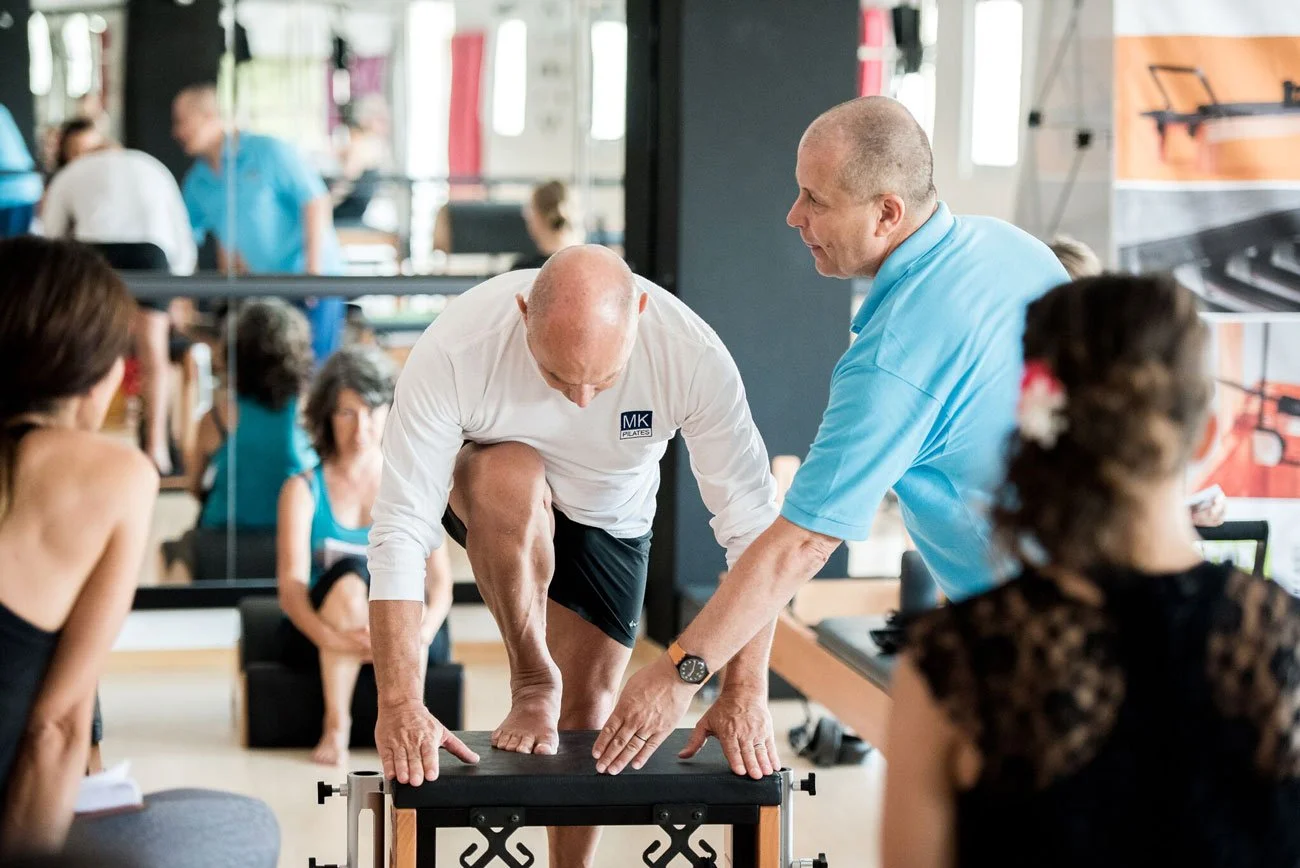
Clients experience much more than the exercise. They experience the teacher's timing, tone, patience and attention. They know when you are genuinely watching them and when you are simply working through what you planned to say.
This is one of the reasons I have always preferred the word teacher rather than instructor. For me, an instructor can tell someone what to do. A teacher is interested in whether the person understands what they are doing and whether that understanding develops over time.
That does not mean we have to turn every Pilates session into a lesson in anatomy and biomechanics. Sometimes learning happens without a long explanation. A client may simply notice that they are using less effort. They may recognise that they have been holding their breath. They may feel that the movement becomes easier when they organise themselves differently.
That moment matters because the client is beginning to work something out for themselves.
I do not want somebody to need me to correct every movement forever. The aim should be that they gradually become better at recognising what they are doing. They should begin to make some of those decisions themselves. That is when Pilates starts to become something they understand rather than something they are simply being told to perform.
This is also why I think we have to be careful about the constant search for harder exercises. Difficulty and quality are not the same thing. Making the spring heavier, making the spring lighter, increasing the range or adding more complicated choreography can all be useful, but only if there is a reason for doing it.
The question I keep coming back to is why. Why am I choosing this exercise? Why am I changing it? What am I asking the client to experience or learn from it?
If I understand the purpose, then I have choices. I can change the range, the resistance or even the exercise itself without losing what I am trying to achieve.
That, for me, is where Pilates being a Method becomes important. Pilates cannot just be a collection of exercises that we reproduce. The principles give the exercises meaning. If we understand the principle, we can adapt the movement and still retain the intention. If we only understand the choreography, we may reproduce the shape perfectly and still miss the point.
I often ask teachers whether they are teaching the exercise or teaching the principle. It sounds like a simple question, but I think it changes the way you teach. If the exercise becomes the most important thing, we can start trying to fit the client into it. If the principle and the purpose are more important, we can adapt the exercise to the client.
And this brings me back to those two teachers. They may have studied with the same training school, used the same manuals, passed the same assessments and learned the same exercises. Yet they will never create exactly the same experience because teaching is more than information.
It is what the teacher notices. It is the choices they make. It is how they communicate and how they respond to the person in front of them.
After all these years, I am less impressed by how much repertoire a teacher can demonstrate and much more interested in what happens when they teach something simple. Can they make the client understand it? Can they help them feel something different? Can they recognise when enough has been said and give the person time to move?
Two teachers can teach exactly the same exercise.
The real difference is what the client experiences while they are doing it.
30 Blogs in 30 Days
Throughout October, we’re sharing one new blog every day, bringing together studio owners, instructors and industry experts to share their experiences, knowledge and perspectives on the Pilates industry.
Day 2 of 30. Come back tomorrow for the next blog.