How to Build a Studio That Prioritises Great Pilates, Not Just Full Classes
A full Pilates class looks like success.
And, of course, as studio owners, we need full classes. We have rent to pay, teachers to pay and businesses to run. I’ve spent the last eleven years running Soul Pilates in Bristol, and I’m certainly not going to tell you that utilisation doesn’t matter.
But I think there’s a more interesting question we should be asking.
Why are your classes full?
Are they full of members who have been coming to you week after week, month after month? Are people progressing from an intro offer into membership and staying? Are they referring their friends?
Or are you continually filling spaces with new introductory offers, discounts and third-party booking platforms like ClassPass, only to find that many of those people don’t come back?
Because those are two very different versions of a full class.
For me, the goal isn’t really a full class. It’s creating Pilates that is good enough that people want to return to it.
And I think that distinction is going to become increasingly important.
What happens when the boom ends?
Reformer Pilates is having an extraordinary moment. Studios are opening everywhere. Classes are selling out. More people than ever are discovering Pilates.
That is brilliant for our industry.
But we’re not the first movement modality to experience a boom. We’ve seen huge waves of growth in yoga, indoor cycling, boutique fitness and other areas of the wellness industry.
Trends move on.
The question I find myself thinking about is: what will still matter when they do?
I believe the answer is great teaching.
If I’m building a Pilates studio today, I don’t just want to build something that can capitalise on the current demand for reformer Pilates. I want to build a studio that people will still want to come to long after the novelty has worn off.
And, perhaps slightly uncomfortably, I think the current level of demand can sometimes disguise problems with quality.
If there are constantly new people wanting to try Reformer Pilates, you can keep filling spaces. But are those people staying?
That’s a very different measure of success.
Decide what great Pilates means in your studio
I don't think there is one definition of a great Pilates class.
There are different schools, different trainings and different approaches to the method. One of the things I’ve come to appreciate more and more is that there is room for those differences.
But I do think, as a studio owner, you need to know what you stand for.
What do you want someone to experience when they walk into your studio?
How should a class be structured? What principles underpin your programming? How do you want teachers to communicate? How should clients feel when they leave? What does progression look like?
In other words: what is your methodology?
This is something I didn't fully appreciate when I first started growing my own studios.
For a long time, I thought hiring brilliant teachers and giving them complete freedom was enough. They had their qualifications. They had their own experience and teaching style. Surely I should simply let them teach?
What I eventually realised was that I wasn't necessarily creating a studio experience. I was creating a collection of individual teacher experiences.
And there's a vulnerability in that.
If a client feels that they come to your studio purely for one particular teacher, what happens when that teacher goes on maternity leave, moves away or decides to teach somewhere else?
I don't want our clients to feel indifferent about who teaches them. The relationship between teacher and client is one of the things that makes Pilates special.
But I do want them to trust the name above the door.
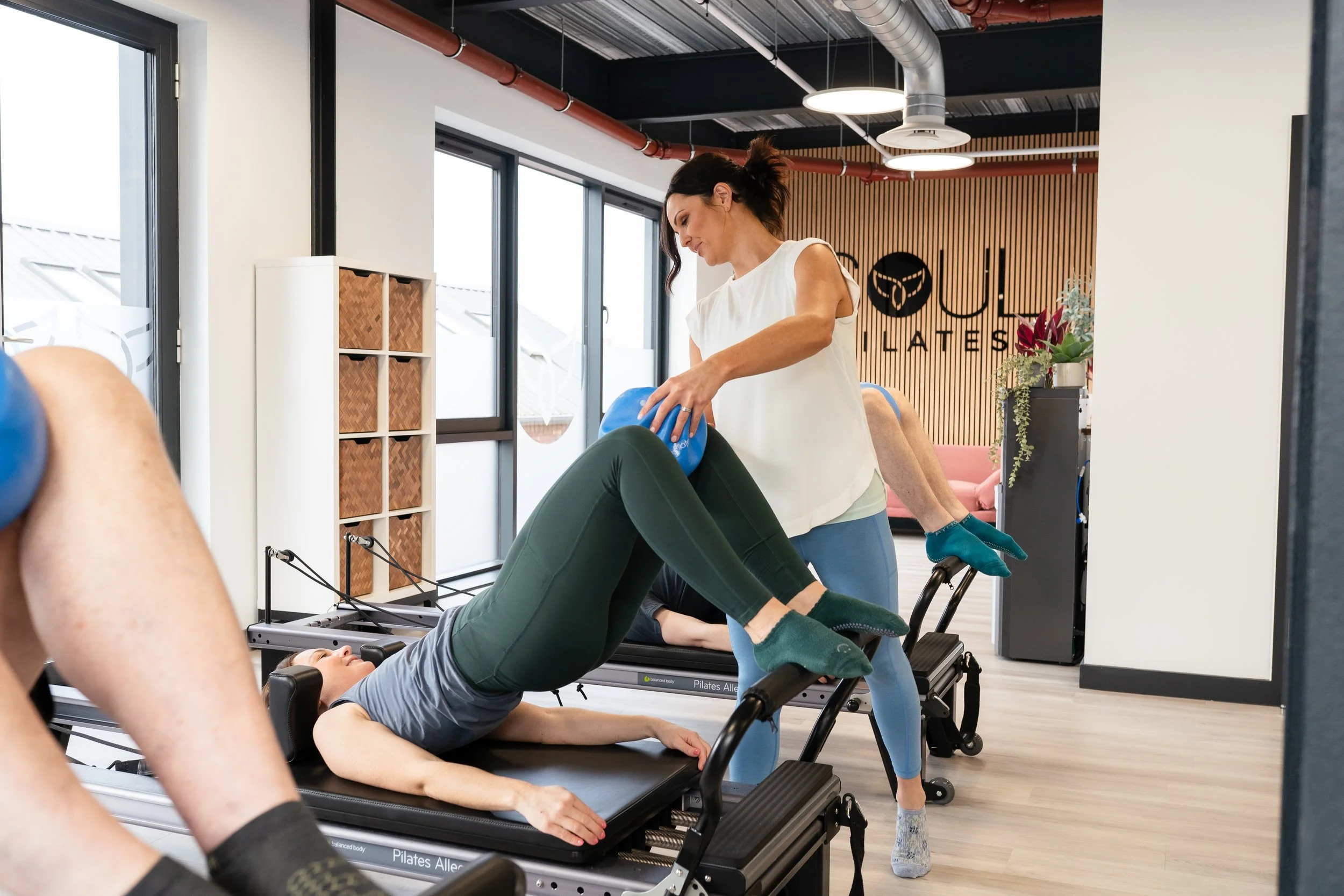
Soul Pilates founder Nic Lenny teaching Pilates
Consistency doesn't mean scripting your teachers
The answer, in my experience, isn't to hand every teacher the same class plan and ask them to deliver it word for word.
Great teaching is human.
Different teachers have different personalities, strengths and ways of connecting with people. Clients are different too. A class at 7am on a Monday might need something different from a class at 7pm on a Friday.
So consistency shouldn't mean uniformity.
What it can mean is creating a framework within which great teachers can teach.
At Soul Pilates, our teachers haven't all come through the same training route. That's the reality for many established studios. So we've had to ask: what are the points of similarity we want to create regardless of where somebody originally trained?
Over time, we've put much more structure around that.
We have Lead Instructors. We run regular teacher development. We have regular reviews and check-ins. Increasingly, we're bringing teachers into the studios through our own Pilates teacher training programmes, but I also think it's incredibly important that education doesn't become an echo chamber.
I regularly teach workshops for teachers at other Pilates studios, often with studios that connect with our ethos and want to explore how some of those principles could work within their own teaching. Equally, I bring educators from outside Soul into our studios to work with my team.
I want our teachers to be exposed to different ideas.
They don't need to teach exactly like me. In fact, I don't want them to. But I do want them to keep learning, questioning and developing their craft.
Because, ultimately, our teachers are our product.
We can spend thousands on beautiful interiors, reformers, branding, marketing and lead generation, but the person standing at the front of the room has an enormous influence over whether the client ever comes back. They are your brand ambassadors.
For me, investing in that person is one of the most important investments we can make.
Don't assume a qualification is the end of teacher development
We've also developed a 90-day onboarding process for new teachers.
Part of that involves watching them teach.
Not because we're looking to catch them doing something wrong, but because we need to understand what support that individual teacher needs.
We've had teachers who needed support with class structure. Others needed help with language or cueing. For some, it was how they opened or closed a class. For others, it might be confidence, programming or creating connection with the people in front of them.
A generic checklist wouldn't necessarily have solved any of those things.
That's another lesson I've learnt: consistency comes from having clear expectations, but great development still needs to be individual.
It’s the same principle we apply to Pilates itself. Meet the person in front of you.
Look beyond occupancy
This is also why I think studio owners need to be careful about which numbers they celebrate.
A class being 95% full tells me something.
It doesn't tell me everything.
I'd also want to know: Who is in that class? How long have they been coming? How many introductory clients become members? How often are members attending? Are they staying? Are they moving between teachers and class times? Are they referring other people?
Those numbers start to tell me whether we've created something people value rather than simply something people are currently interested in trying.
Because acquisition can hide a retention problem for quite a long time, particularly when demand for a modality is high.
If enough new people keep arriving through the front door, you might not notice how many are quietly disappearing through the back.
Build beyond the trend
None of this means commercial success and great Pilates sit on opposite sides of the table.
I think the opposite is true.
Great Pilates is part of the commercial strategy.
When people feel known, when they see progress, when they trust your teachers and when they know what your studio stands for, you give them reasons to stay that go far beyond having a reformer near their house.
And that is the business I want to build.
Not a studio dependent on one superstar teacher. Not a studio chasing an endless stream of introductory clients. And not a studio that happens to be busy because Reformer Pilates happens to be having a moment.
A studio with an identity.
A studio where teachers are supported to become exceptional at what they do.
A studio where there is enough consistency that clients know what they are buying, and enough humanity that every class doesn't feel exactly the same.
And, ultimately, a studio where great classes create full classes.
Because if we want our businesses to endure beyond the current Pilates boom, I think that's what.
30 Blogs in 30 Days
Throughout October, we’re sharing one new blog every day, bringing together studio owners, instructors and industry experts to share their experiences, knowledge and perspectives on the Pilates industry.
Day 7 of 30, come back tomorrow for the next blog.