Is Admin Holding Your Pilates Studio Back? How to Work Smarter as You Grow
A growing studio brings more bookings, more members and more work behind the scenes. Here’s how to stop routine admin taking over the day.
From the reformer, a Pilates studio can look like the epitome of calm. But for the owner, the minutes before opening the doors to their serene space may have involved scrambling to find a replacement instructor, a member asking to move a booking and a failed payment that needs chasing.
Of course, these jobs are part of running a studio but they seem to multiply as the business grows. More members mean more booking changes, while a bigger timetable brings more instructor substitutions. Processes that once worked perfectly well begin to show their limits.
At bsport, we see it with Pilates studios all the time: the setup that worked for the first 50 members starts to creak at 300.
The good news is, you can fix it in 2 steps. First, find out where your time actually goes. Then hand the routine work to your studio management platform so you and your team can spend more time with members.
When admin becomes a problem
Admin starts to hold you back when your processes can't keep pace with the studio itself.
The owner who once knew every member becomes the person everyone has to ask. Open a second location and that gets harder to ignore, especially when one person's memory is doing the job of a management system.
Here are 4 signs your studio has outgrown its setup:
Your team enters the same member information in more than one place
Routine requests wait for your approval
Members need help with things they should be able to do themselves
Reports take so long to put together that nobody uses them
Members feel it too. They won't know a process is manual, but they'll notice when a reply is slow or their account balance is wrong.
That can decide whether they book at all. When bsport surveyed 550 regular boutique fitness attendees for the Fitness Studio Playbook, 1 in 5 said a complicated or unclear booking process would stop them trying a studio. Yet 18% still book by message or email, and 8% book through social media links or DMs.
Every manual booking adds another job to your team's day and another chance for a detail to slip.
Audit your admin for 7 days
Before you add another tool, spend a week noticing where the time goes.
Write down each routine interruption, how long it took, and who else could have handled it. You don't need to account for every minute. You're looking for the repeat offenders: the booking question that arrives every day, the report that means copying figures between 2 systems, or the task nobody can finish when you're away.
Small jobs count here. A 2-minute task done 20 times a week adds up to more than 34 hours a year, and the interruptions make it harder to focus on everything around them.
Once the pattern is clear, sort the list into jobs you can drop and jobs a system could run for you. Old processes often survive because nobody stopped to ask why they're still there.
Automate routine tasks
Automation works best on predictable jobs, and most studio admin is predictable.
In bsport, booking confirmations send themselves. When a late cancellation frees up a reformer, the next member on the waitlist hears about it straight away. Payment reminders go out at the right time without anyone setting a calendar alert.
Members can handle the basics on their own too. Through the bsport app, they can book a class, check what's included in their membership, and update their details without messaging reception.
That leaves your team free for the conversations that need a person. A member coming back after an injury may want guidance, and someone trying the reformer for the first time may need reassurance.
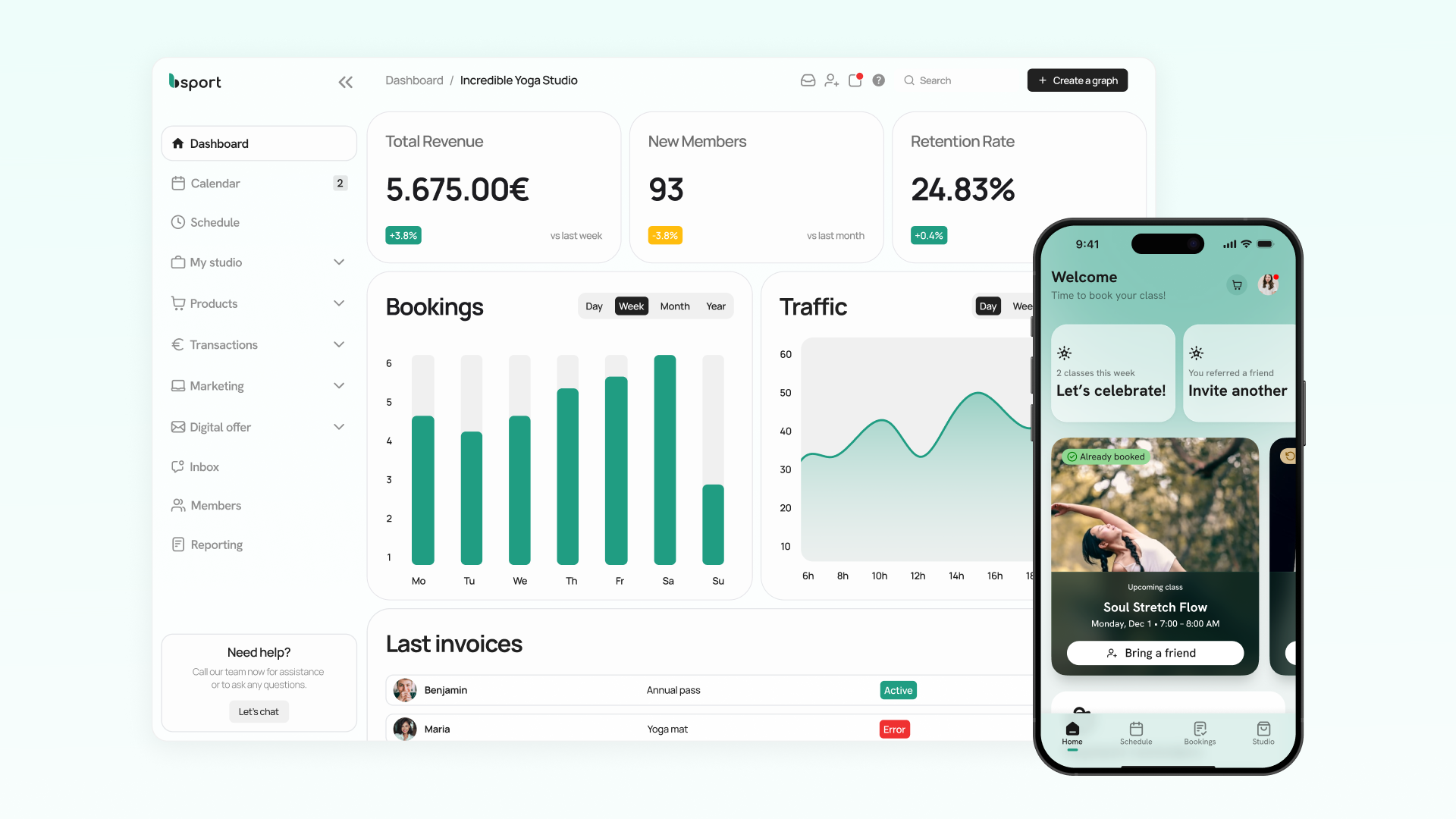
bsport studio management dashboard displaying revenue, bookings, member retention and performance analytics alongside its mobile booking app.
Keep your studio information in one place
Things get muddled fast when bookings live in one tool, payments in another, and member notes somewhere else. Your team ends up joining the dots.
bsport keeps it all together, so everyone works from the same view of the day. A cancellation updates availability, a purchase lands on the right member account, and attendance feeds straight into your reports without anyone rebuilding the figures each week.
The bigger win is what you can see. You can spot which reformer sessions fill every week and which are slowly fading. You can check whether your intro offer brings people back, or whether failed payments are eating into revenue.
That makes it easier to act early. You can move a poorly timed class before months of low numbers turn it into a drain. If a beginner session keeps filling, you have the evidence to add another.
Give your team responsibility
Many owners hand over teaching hours but stay involved in every operational decision. The team does the work, and the questions keep coming back.
A short, shared process for common situations breaks that habit. Your staff need to know how to handle a failed payment and what to do when an instructor needs cover. They also need to know when to bring you in.
The right access helps. With staff permissions in bsport, each person sees what they need for their role and can help members without waiting for sign-off, while sensitive business data stays with you.
Melody Benhamou has seen the difference across Idolem's network of 40 active studios, all running on bsport. "The easier the system, the more we can focus on something other than just making the day go well," she says.
For a growing studio, that means the day runs well without you stepping in at every turn.
Protect the personal side of Pilates
Pilates is built on attention. Members come back because an instructor remembers an injury, notices their progress, or makes a nerve-racking first class feel manageable.
Good systems give you more room for that. When booking changes and timetable updates happen in the background, your instructor can focus on the nervous person walking into their first reformer class. You're more likely to notice when a familiar face stops showing up.
Growth will always bring more activity, but it doesn't have to bring the same rise in manual work. If your old processes are starting to creak, they've done their job. Your studio is ready for a setup built for what comes next.
30 Blogs in 30 Days
Throughout October, we’re sharing one new blog every day, bringing together studio owners, instructors and industry experts to share their experiences, knowledge and perspectives on the Pilates industry.
Day 17 of 30, come back tomorrow for the next blog.