
You've looked at three competitors. One charges £18 a class, one charges £30, and one has a pricing page that requires you to enquire. You're about to set your own prices and you have no idea whether you're about to leave money on the table or price yourself out of a client base you haven't built yet.
Most guides on reformer pilates class prices in the UK answer the wrong question. They tell clients what to expect to pay. This one tells studio owners what to charge, and more importantly, why.
Here are the 2026 UK benchmarks, the logic behind each pricing tier, and the mistakes that cost studios tens of thousands of pounds a year without anyone noticing.
Key Takeaways
UK drop-in rates range from £20 to £35 depending on location and positioning
Monthly memberships are the most financially stable revenue model
Studios that open with prices too low often struggle to raise them later
Pricing is a positioning signal — your number tells clients what kind of studio you are before they've even booked
Annual price reviews of 3 to 5% are far less disruptive than a single large jump
2026 UK Reformer Pilates Pricing Benchmarks
Reformer pilates class prices in the UK vary by format, location, and studio model. The table below reflects current market rates observed across boutique group reformer studios in London, Manchester, Bristol, Leeds, and Edinburgh. Use these as a calibration point, not a ceiling.
| FORMAT | UK BENCHMARK RANGE | NOTES |
|---|---|---|
| Drop-in single class | £20 – £35 | London studios £28–£35; regional studios £20–£28 |
| Intro offer (bundle) | £12 – £20 | 2–3 classes, time-limited to first 30 days |
| Class pack (8–10 sessions) | £160 – £280 | Effective per-class rate 10–20% below drop-in |
| Monthly unlimited membership | £140 – £220 | Boutique sweet spot sits at £160–£180 |
| Private 1-to-1 session | £65 – £120 | Specialist or premium positioning |
| Duet session (per person) | £40 – £65 | Growing mid-tier option across UK studios |
| Corporate or group booking | £25 – £45 per person | Scales with group size and frequency |
Clinical Pilates and rehabilitation-focused sessions operate at a separate price point entirely, typically £45 to £90 per session, and are not directly comparable to the boutique group model.
Why Studio Owners Get Pricing Wrong From Day One

The most common pricing mistake in reformer pilates is not charging too much. It is charging too little out of anxiety about empty reformers, then building an entire business model around a price that cannot support sustainable margins.
The pattern is specific. A studio opens at £15 to £18 per class because it feels accessible. An introductory offer drops the effective rate to £10 or £11. Founding clients join at that price and resist any increase. The owner holds prices flat for eighteen months. By the time a raise becomes unavoidable, the studio has trained its client base to expect the lower number, and increasing it feels like a betrayal rather than a normal business decision.
According to a survey by Reformer Pilates, more than 54% believed their pricing model needed to evolve, and in almost every case, the direction of change was upward. The studios reporting the strongest net margins set their prices based on the value they delivered and the market they served, not on what they feared the rota could fill at.
Pricing is also a positioning signal. A £15 drop-in and a £28 drop-in sit in entirely different mental categories for a prospective client, even when the class quality is identical. Set the wrong anchor at launch and you spend years trying to reposition from inside a brand you accidentally built.
How to Price Each Format
Drop-In Classes
The drop-in rate is your anchor. Everything else, packs, memberships, intro offers, is priced relative to it. If this number is wrong, every other tier compounds the error.
Setting it requires knowing three things: your cost per class slot (fixed monthly costs divided by total weekly capacity multiplied by your realistic fill rate), the going rate in your specific local market, and the positioning you intend to hold. The third variable matters as much as the first two.
A boutique studio in central Manchester targeting professionals in their 30s and 40s belongs at £25 to £30, not matching the community leisure centre down the road at £12. A studio in a smaller market with genuinely lower local income levels may be correctly placed at £20 to £22, even if its product is excellent. Neither is wrong. What is wrong is setting a number without knowing which situation you are in.
One practical test: if new clients are booking without hesitation and your intro offer waitlist is long from day one, your drop-in price may be set too low. Some friction at the booking stage is not always a bad sign.
Intro Offers
The intro offer is the most commercially important element of your pricing structure, and the one most studios design badly.
A well-built intro offer does one thing: it converts a new enquiry into a committed regular. That means enough sessions for the client to feel a result, a deadline short enough to create urgency, and a price low enough to reduce the risk of a first decision without signalling that your core price is negotiable.
The UK market benchmark is £12 to £20 for a two or three-class bundle, valid within the first 30 days. Some studios run a "first week unlimited" format at £20 to £25, which works when the timetable has enough variety to make unlimited attendance feel genuinely valuable rather than theoretical.
What consistently fails is a single discounted class. One session is rarely enough for a client to experience the benefit of reformer pilates and build any attachment to the studio. You need at least two or three sessions to close the gap between "this was interesting" and "I need to book again."
The critical discipline is not advertising the intro offer indefinitely as though it is your normal price. The moment it starts attracting clients who have no intention of converting to full-price membership, it is costing you more than it is delivering.
Class Packs
Class packs serve the client whose schedule is unpredictable or who wants to try a studio across several weeks before committing to a membership. They also give the studio a meaningful upfront cash payment.
The UK benchmark for a ten-class pack is £160 to £280, delivering an effective per-session rate of £16 to £28. The discount relative to drop-in should be real enough to make the commitment feel worth it (typically 10 to 20%), but not so deep that a pack becomes a permanent substitute for membership.
This is where studios quietly lose recurring revenue. If a ten-class pack already delivers a per-session price close to what a membership would cost per class, clients have no rational reason to upgrade. Packs should be a stepping stone toward membership, not an equally attractive alternative.
Give packs an expiry. Ninety to 120 days is standard across the UK market. Sessions that never expire accumulate as liability on your books and allow clients to buy packs purely for the discount with no intention of attending regularly.
Monthly Memberships
Memberships are where the financial model of a reformer studio is either built or undermined. A studio with 60 to 70% of revenue on recurring memberships has predictable cash flow, lower dependence on new client acquisition each month, and far more resilient margins than one running primarily on drop-ins and packs.
The UK benchmark for a monthly unlimited membership is £140 to £220. In practice, most boutique studios price their headline tier at £160 to £180 per month. Studios in premium London locations or those with established brand equity and genuine waitlists can sustain £200 to £220 without significant attrition.
A tiered structure gives clients more options and gives the studio better segmentation:
Foundation (4 classes per month): £60 to £80 — aimed at the once-a-week attendee who wants a committed rate
Regular (8 classes per month): £110 to £140 — the most popular tier for clients building a two-sessions-per-week habit
Unlimited: £160 to £220 — appealing to the client who wants flexibility and maximum value from a single monthly payment
The structure works because it makes the unlimited tier look like the obvious choice at the point of decision, while still accommodating clients who are not yet ready to commit fully. Clients upgrade naturally as their attendance habit solidifies — which is a better growth model than depending on continuous new sign-ups.
How Location Affects Reformer Pilates Prices in the UK
Location is the single largest determinant of where your pricing should sit within the benchmark ranges above. This is not a simple London-versus-everywhere-else calculation.
Central London (Chelsea, Notting Hill, Marylebone, Shoreditch): drop-in at £30 to £35 is market-standard. Monthly unlimited memberships at £180 to £220 are common and expected by a client base that already pays premium prices across most discretionary categories.
Major regional cities (Manchester, Birmingham, Bristol, Leeds, Edinburgh): drop-in market sits at £22 to £28, memberships at £150 to £180. These markets are maturing quickly. The regional discount that existed three years ago is narrowing as boutique fitness literacy spreads outside London.
Smaller towns, suburban markets, and university cities: drop-in prices of £18 to £24 are more typical, with memberships at £130 to £160. These markets can still generate strong profits, particularly for home studio operators with a lean cost base, but the revenue ceiling is lower.
Our studio directory maps studios by city across the UK, which gives useful context on where demand is concentrated and what pricing benchmarks established operators in your target area are setting.
The Revenue Cost of Underpricing
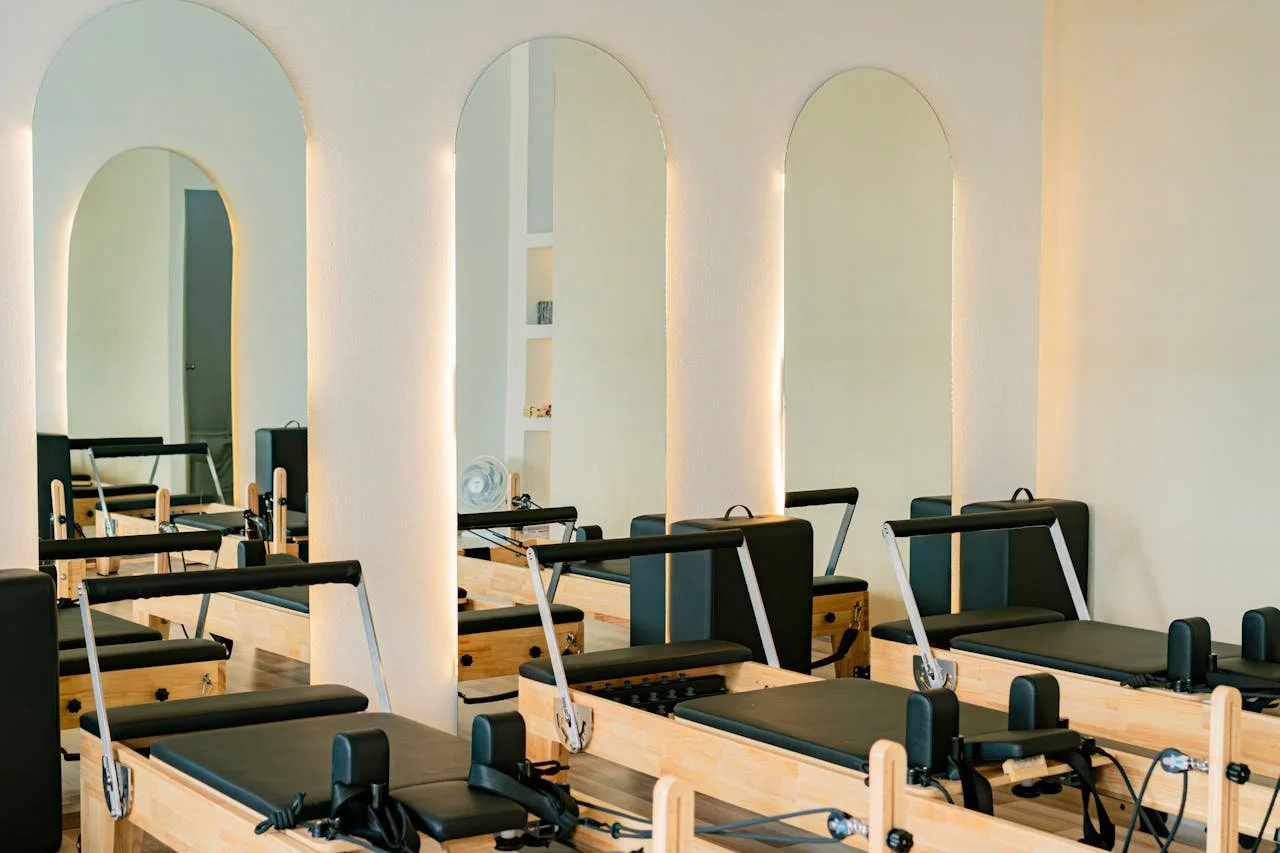
Underpricing is not a conservative approach. It is a compounding problem that most studio owners only recognise years too late.
A studio charging £18 per class in a market that supports £25 is not losing £7 per session in some abstract sense, it is losing that margin across every class, every week, every year. Run the numbers: a studio delivering 30 classes per week, averaging 5 clients per class at £18 per session, generates £140,400 in annual class revenue. The same studio at £25 per session generates £195,000. The £54,600 difference pays for an additional instructor, a studio renovation, or two years of marketing investment.
Underpricing also shapes who your clients are. Price-sensitive clients are harder to retain, more likely to leave when a competitor opens with an introductory offer, and less likely to refer people from their professional networks. Data from studio owners surveyed by Reformer Pilates shows that 93% of new client acquisitions at reformer studios come through word-of-mouth referrals. Premium pricing attracts the clients most likely to generate those referrals consistently.
For the full financial model behind a sustainable pricing strategy, our pilates studio guide covers break-even calculations, cost structure, and revenue projections for both boutique and home-based studio models.
Raising Prices Without Losing Clients
Every studio that opens at a reasonable price for year one will need to raise that price eventually. Costs increase, instructor wages rise, and a studio appropriately priced in 2023 is likely undercharging by 2026. The studios that handle this well treat it as a normal operational decision rather than a crisis requiring apology.
Give four weeks notice minimum. Announce directly by email to your member list, be clear about the new price and the date it takes effect, and explain briefly what the studio is investing in. Vague announcements create anxiety. Specific ones project confidence.
Protect existing members for one billing cycle. Hold the current rate for one more payment, then move everyone to the new price. This communicates respect for loyalty without creating a permanent two-tier structure.
Do not frame it as an apology. A price increase communicated as an apology tells clients that you think the increase is unreasonable. It invites negotiation. Present it as a straightforward business decision made in the interest of the studio's quality and longevity. Clients who value the experience will stay. Those who leave over a £10 monthly increase were unlikely to be long-term members regardless.
Set a cadence and stick to it. Studios that review pricing annually and make small adjustments of 3 to 5% absorb those changes far more smoothly than studios that hold prices flat for three years and then need to jump 20% in a single announcement.
Make Your PRicing Page Do More Work
Most studio pricing pages list numbers. The best ones explain the logic behind them and convert visitors in the process.
A confident, transparent pricing page signals that the studio knows its value. Vague pricing, or worse, a page that says "contact us for details," signals uncertainty and adds friction for the client who was almost ready to book. Show all your tiers, explain what each one is for, and make the membership option clearly the most rational choice for anyone planning to attend more than twice a month.
The Loop community for studio owners on Reformer Pilates is a useful place to see how other operators are structuring their pricing pages and what language is converting well right now.
Conclusion
Reformer pilates class prices in the UK follow a clear structure: drop-in at £20 to £35, intro offers at £12 to £20, class packs delivering 10 to 20% below drop-in, and monthly memberships at £140 to £220. The number that fits your studio depends on your location, your cost base, and the positioning you are committed to holding.
Price confidently from day one, build your membership tier as the core revenue model, and review annually rather than reactively. To see how the full financial model fits together for your specific studio, book a meeting with the Reformer Pilates team.
Frequently Asked Questions
How much do reformer Pilates classes cost in the UK?
A single group reformer class in the UK costs between £20 and £35, depending on location and studio positioning. London studios typically charge £28 to £35; regional studios sit at £20 to £28. Private one-to-one sessions run from £65 to £120.
How much is a Pilates membership per month in the UK?
Monthly unlimited memberships range from £140 to £220 across the UK boutique market. Most studios price their headline membership at £160 to £180 per month. Tiered options starting at four classes per month begin at around £60 to £80.
Are Pilates studios profitable in the UK?
Yes, when pricing and cost structure are managed well. Boutique reformer studios in the UK generate turnover of £200,000 to £400,000 annually, with net margins reaching up to 20% in well-run operations. Home-based studios often achieve stronger margins of 10 to 30%.
How much should I charge for a Pilates intro offer?
The UK market standard is £12 to £20 for a bundle of two to three classes, valid within the first 30 days. The goal is to lower the barrier to a first booking without signalling that your core price is negotiable. Do not run the offer indefinitely.
What is the most profitable pricing model for a reformer Pilates studio?
Membership-anchored revenue is the most financially stable model. Studios with 60 to 70% of revenue on recurring monthly memberships have predictable cash flow and lower dependence on continuous new-client acquisition. Drop-ins and class packs should support the membership model, not compete with it.

Author
KARL KNIGHTS
Leading commercial operations for Reformerpilates.com. A pioneering platform transforming the global Reformer Pilates industry. Our mission is to revolutionise how studios, instructors, and enthusiasts connect, creating a vibrant community and driving business growth in the rapidly expanding wellness market.