
The Reformer Pilates Opportunity in 2026
How the Market Has Changed
When we produced our first Independent Studio Guide in 2025, Reformer Pilates was already growing at an extraordinary pace.
More people were discovering Pilates. New studios were opening across the UK. Instructor training was expanding. Reformer was moving from a relatively specialist form of exercise into a much more mainstream part of the fitness and wellness market.
That momentum has continued.
Reformer Pilates remains one of the most exciting areas of the boutique fitness industry. Demand is strong, new customers keep discovering the format, and entrepreneurs enter the market every year.
But something important has changed.

Industry Speakers at the ReformerPilates.com annual event in London, June 2026
The opportunity is no longer simply about opening a Reformer Pilates studio.
It is about building a good one.
That distinction became particularly clear on 3rd June 2026, when ReformerPilates.com brought together 120 studio owners, educators, operators and industry leaders at The Soho Hotel in London for our first Building Better Reformer Pilates Studios event.
The objective of the day was to move beyond equipment and trends and understand what is actually driving success.
What emerged was a picture of an industry entering its next stage.
Growth has created competition
The rapid growth of Reformer Pilates has created enormous opportunity.
It has also created significantly more choice for customers.
A few years ago, simply being the only Reformer Pilates studio in an area could be a meaningful competitive advantage. Today, that is becoming less common.
Customers can increasingly choose between independent studios, boutique fitness operators, health clubs, gyms, hotels and other wellness businesses offering Reformer Pilates.
That changes the question prospective studio owners need to ask.
It is no longer simply:
"Is there demand for Reformer Pilates here?"
It is also:
"Why will somebody choose our studio?"
At our June event, Ava Rodri spoke about the dangers of chasing trends or trying to appeal to everyone. Her message was that the strongest businesses are not necessarily the loudest. They are the clearest.
They understand who they are for, the problem they solve and why that matters to their customers.
That clarity is becoming increasingly important.
Class formats can be copied. Equipment can be bought. Prices can be matched.
A distinctive business is much harder to replicate.
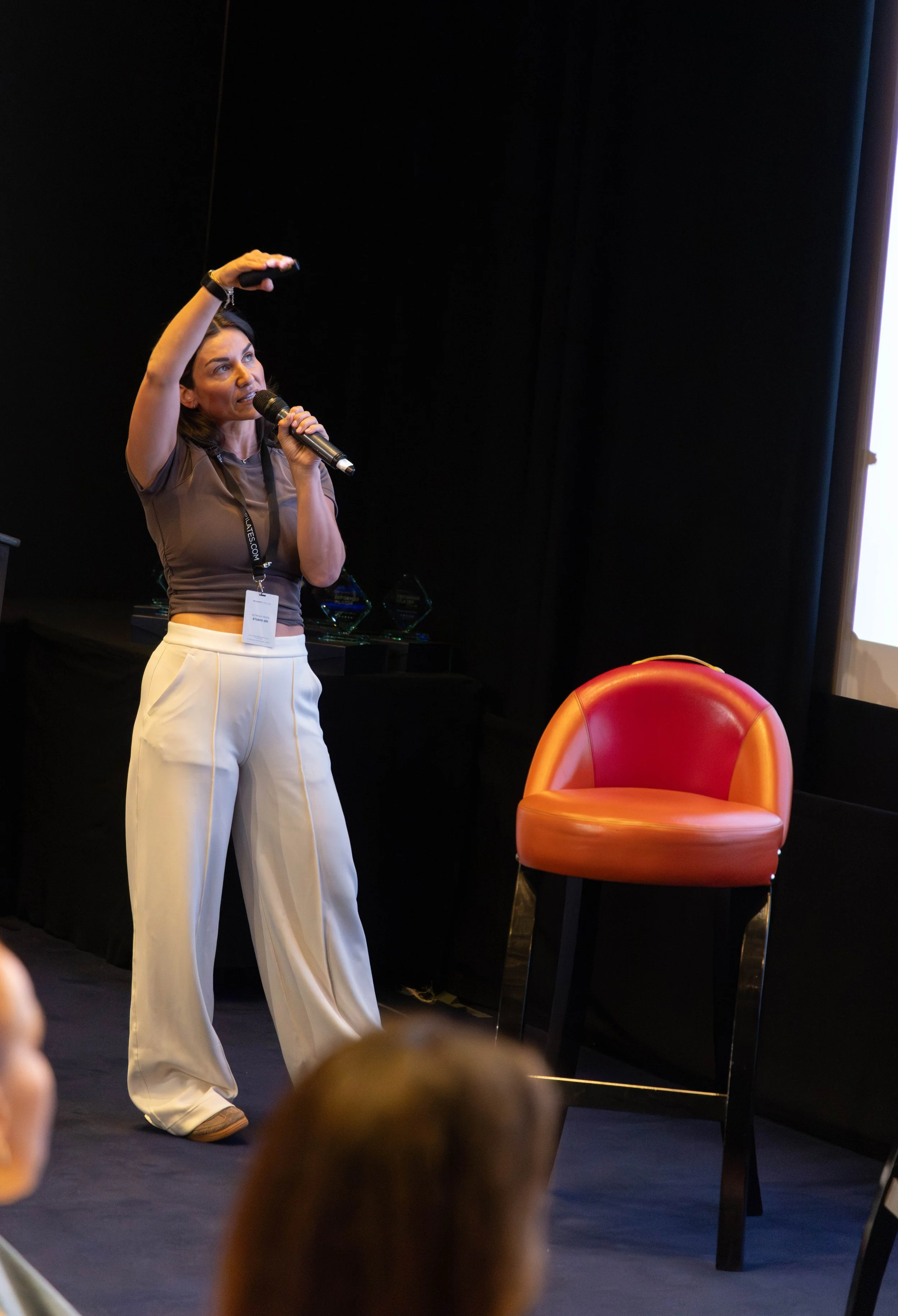
Georgia Testa highlighting the importance to build real community value
Reformer Pilates itself is no longer enough
One of the most interesting observations from the June event came from Georgia Testa.
Her argument was simple:
“Reformer Pilates is no longer the differentiator. Connection is.”
That represents an important change in the market.
As Reformer becomes more accessible, customers increasingly make decisions based on everything that surrounds the class.
The instructor who remembers their name.
How comfortable they felt during their first session.
Whether they feel part of something.
The quality and consistency of the experience.
Whether someone notices when they stop attending.
Kevin Bagayoko expanded on the same principle. As competition increases, emotional attachment, belonging and identity become increasingly important reasons for customers to stay.
Successful studios are therefore being built around more than exercise.
They are building cultures and communities that customers want to remain part of.
For a prospective owner, this means thinking about the client experience before the studio even opens.
More instructors does not necessarily mean more great instructors
The growth of Reformer Pilates has created another challenge.
Instructor demand has increased rapidly, and the training market has expanded alongside it.
But qualification and real-world readiness are not necessarily the same thing.
Our opening panel at the June event, featuring Michael King, Nic Lenny and Andreina Santaella, asked an uncomfortable but important question:
Are we producing more great instructors, or simply more instructors?
Technical education remains fundamental.
But delivering an exceptional class also requires communication, confidence, observation, adaptability and the ability to connect with different clients.
“Your personality is your super power as an instructor” Nic Lenny
Many of those skills develop through experience, mentorship and ongoing education rather than qualification alone.
For studio owners, recruitment is therefore only one part of the challenge.
The better question is:
How will we recruit, onboard, develop and retain instructors capable of consistently delivering the experience our studio promises?
That is becoming one of the industry's defining operational questions.

The performance gap is becoming more important
Perhaps the biggest change in the conversation is the growing focus on what happens after the doors open.
Demand alone does not create a successful studio.
Utilisation matters.
Conversion matters.
Retention matters.
No-shows matter.
Pricing matters.
Instructor costs matter.
And knowing what is happening across all of those areas matters.
At the June event, Rachel Lea Fishman, CEO of Arketa, highlighted the growing performance gap between average and high-performing studios.
Her message was particularly important because the difference was rarely explained simply by location or luck.
Higher-performing studios tended to demonstrate stronger operational discipline.
They understood utilisation.
They managed waitlists.
They reduced no-shows.
They followed up prospective customers.
They used technology effectively.
And they had better visibility of the numbers driving their business.
This points towards a much more mature industry.
The question is becoming less about whether Reformer Pilates is popular and more about ‘how efficiently a studio converts that popularity into a sustainable business’.
Marketing has become a process, not a post
Marketing is evolving in the same way.
Social media remains important. Strong content, an attractive brand and an engaged following can all help a studio grow.
But marketing a studio in 2026 requires more than posting consistently on Instagram.
Elle Kealy's presentation at our June event focused on the complete journey from generating leads through introductory offers, conversion and ultimately member retention.
One point stood out.
Many owners still fail to consistently follow up prospective customers, even though sales often happen after multiple interactions.
It is a relatively simple example of a much bigger principle.
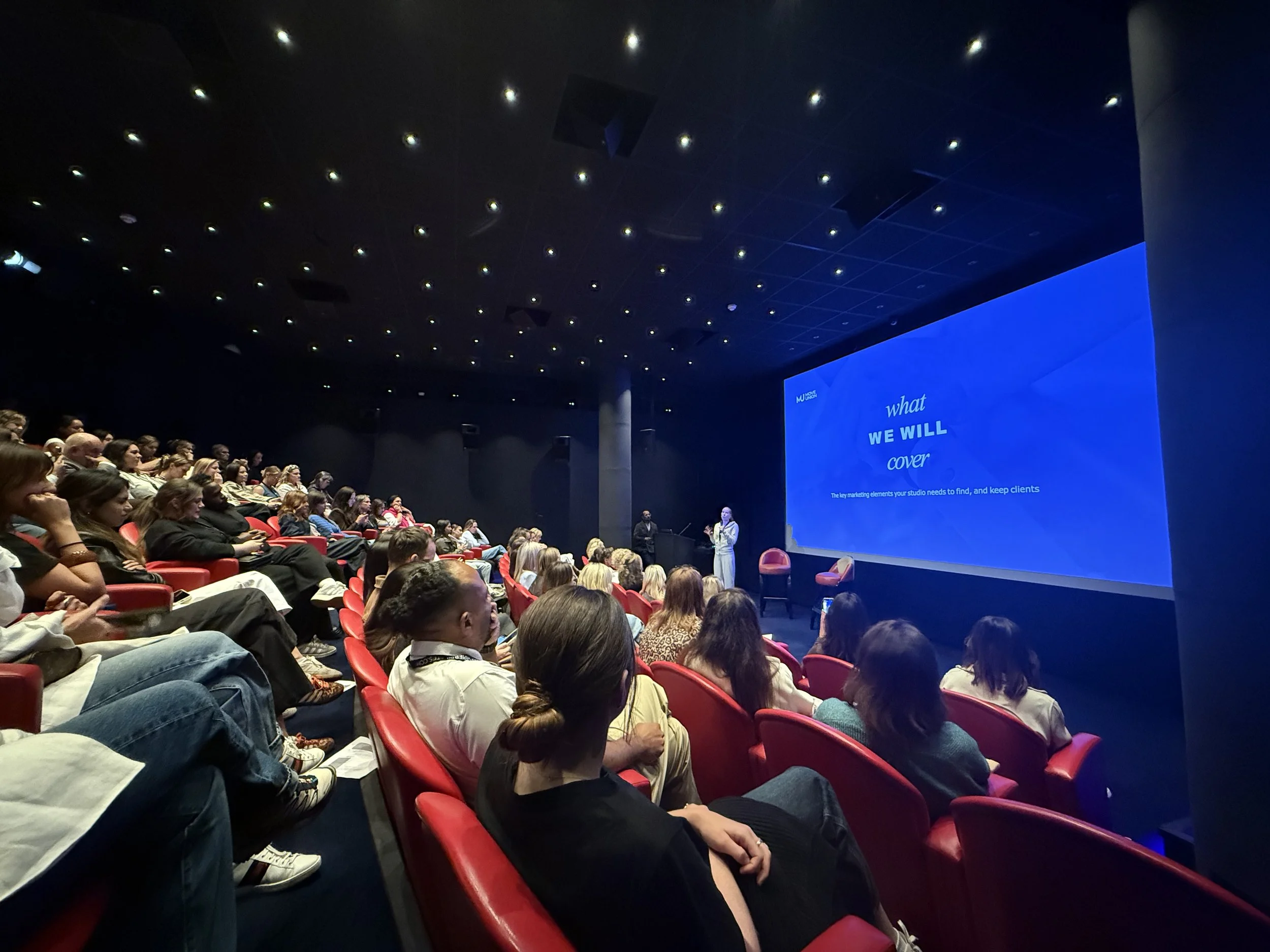
Elle shared her expertise in building marketing processes that convert
Growth is increasingly about systems.
How quickly does somebody receive a response after making an enquiry?
What happens after they purchase an introductory offer?
What happens after their first class?
Who follows up if they do not return?
When does somebody get invited to become a member?
What happens when an established member suddenly stops attending?
Successful studios increasingly design these journeys rather than leaving them to chance.
The economics of running a studio are becoming more important
There is another side to the maturing market.
The cost and complexity of running a studio are increasing.
Changes to business rates in England from April 2026 mean property costs deserve greater scrutiny. Temporary relief measures available to leisure and hospitality businesses in previous years cannot simply be assumed to continue indefinitely.
For an owner, rent alone is therefore not a sufficient measure of property cost.
Business rates, service charges, utilities, insurance and other occupancy costs all need to form part of the financial model.
The same applies to risk.
As studios employ more instructors, welcome more clients and invest more heavily in equipment and fit-outs, insurance is becoming part of wider business risk management rather than something arranged once when the studio opens and then forgotten.
Public liability, professional indemnity, employer's liability where required, equipment cover and business interruption can all become relevant as the business grows.
These subjects may be less exciting than programming, branding or studio design.
But they reflect an important reality.
Growth brings greater responsibility. Owners increasingly need to think like business builders
The final session of our June event brought many of these themes together.
Cat DeHaven and Mitch McGinley explored what ultimately makes a studio valuable.
Their framework was surprisingly straightforward.
Strong financial records.
Recurring revenue.
A capable team.
Documented systems.
A secure lease.
Their message was not simply aimed at owners thinking about selling.
It was that owners should not wait until they want to sell before thinking like builders.
A studio that understands its numbers, develops its people, documents its processes and generates predictable revenue is not simply more valuable to a future buyer.
It is usually a better business to own.
It is easier to manage.
It is more resilient.
It is easier to scale.
And critically, it becomes less dependent on the founder being involved in every decision.

The opportunity in 2026
None of these changes diminishes the opportunity.
If anything, they make the opportunity more interesting.
Reformer Pilates continues to attract new customers, new investment and new studio owners.
But the industry is entering a stage where enthusiasm alone is unlikely to be enough.
The next generation of successful studios will combine great Pilates with good business.
They will have a clear proposition.
They will understand their market.
They will recruit and develop excellent instructors.
They will create experiences customers want to return to.
They will build communities people want to belong to.
They will understand their numbers.
They will use technology and systems intelligently.
And they will protect the business they are creating.
This is the biggest difference between opening a studio in 2025 and building one for 2026 and beyond.
The opportunity remains strong. The standard required to capture it is getting higher.
That is the starting point for this guide.
Because building a better Reformer Pilates studio is no longer about any single reformer, instructor, software platform or marketing campaign.