When Everyone Has a Reformer, What Makes a Pilates Studio Stand Out in a Growing Market?
Reformer Pilates seems to be everywhere at the moment. New studios are opening, existing fitness businesses are adding it to their offering, and larger gyms are introducing dedicated reformer spaces. It’s great to see Pilates becoming more accessible and more people getting the opportunity to try it. At the same time, as Reformer Pilates becomes more widely available, simply having reformers is no longer enough to make a business stand out.
When I opened Sculpt Pilates a little over two years ago, the landscape looked quite different. As the industry has grown, I’ve thought a lot about what makes someone choose one place over another, and more importantly, what makes them keep coming back. For me, it comes down to the quality of the Pilates, the instructors delivering it, and how people feel when they walk through the door.
Keep Pilates at the Core (no pun intended!)
At Sculpt, we teach contemporary Reformer Pilates. We like variety, we use props, and we’re always developing our classes, but the fundamentals of Pilates are still at the core of what we do: breath, control, precision, concentration and flow.
As Reformer Pilates becomes more mainstream, I think it’s important that we don’t lose sight of those principles. There can be temptation to equate harder with better. More complicated choreography, heavier resistance, or leaving a class completely exhausted doesn’t necessarily mean someone has had a better Pilates session. For us, there should always be intention behind what we're asking somebody to do.
Clients might not consciously notice every element of good teaching, but they feel the difference. They know when they’ve been properly guided through a movement, challenged at the right level, and helped to understand their body a little better.
Staying true to the principles of Pilates doesn’t mean that classes can’t evolve. There’s plenty of room for contemporary Pilates, creativity, and variety. It’s about making sure the Pilates fundamentals don’t get lost along the way.
Your instructors are your studio
One of the biggest things I’ve learned as Sculpt has grown is just how important the instructor team is. When we first opened, I taught a lot of the classes myself. As the studio has grown, I teach much less, and the experience our clients have at Sculpt every day is created by our whole team.
As an owner, you can spend a huge amount of time thinking about your brand, your timetable, your studio, and the overall customer experience, but a large part of someone’s relationship with your business is built during the time they spend with their instructor.
I’m very lucky to have a team who genuinely care about the people they’re teaching. They’re the ones who remember that someone mentioned a sore shoulder last week, reassure someone who’s nervous walking into their first Reformer class, and notice when a client needs a little more guidance or a little more challenge.
For me, a great instructor isn’t necessarily the person who can programme the most impressive-looking class. It’s someone who can read the room, communicate clearly, make people feel comfortable and, most importantly, teach really good Pilates.
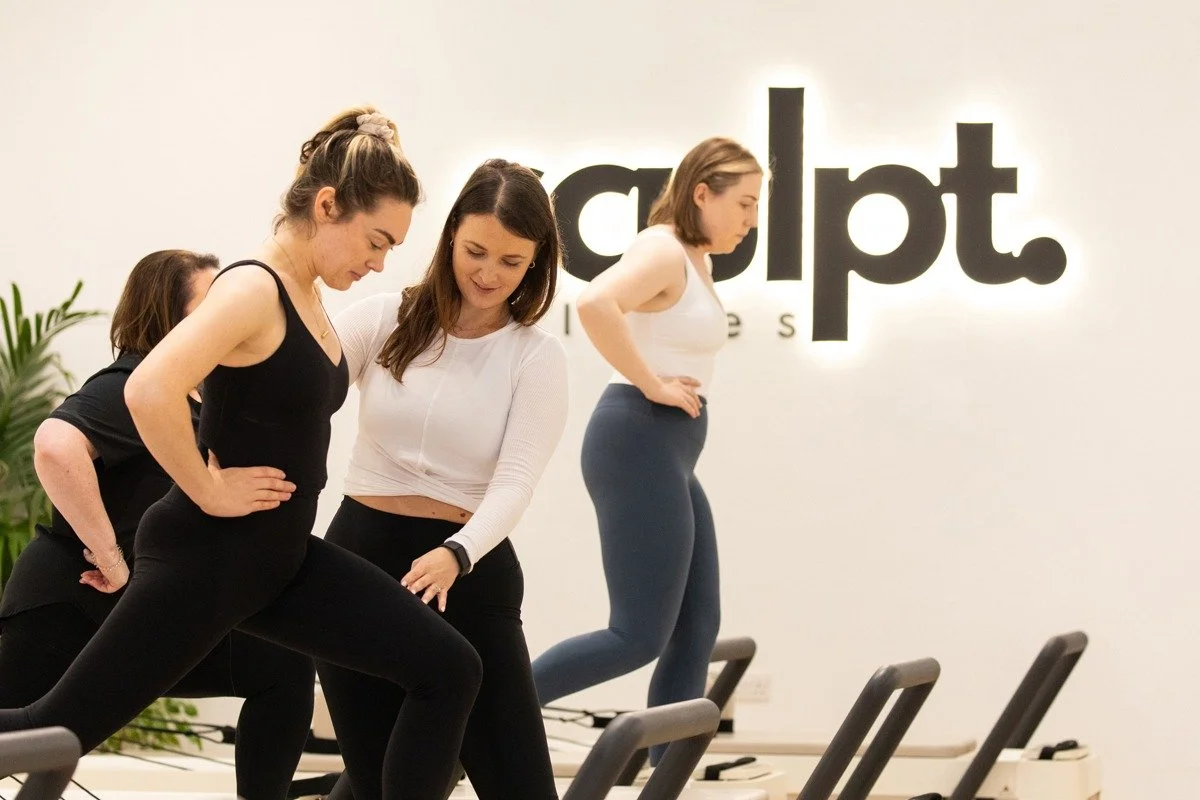
Laura McPadden, founder of Sculpt Pilates, teaching a Pilates class
Teach the people in front of you
That leads into something else I think can get overlooked as classes become busier: actually teaching the people in front of you.
We get to know our clients over time. We know their names. We know who has a dodgy knee or a sensitive wrist. We know who has recently had a baby, who is building confidence after an injury and, quite often, we’ll know about their children, their dog, holidays, and what they’ve been up to that week too. That knowledge isn’t just about creating a friendly atmosphere. It should influence what happens in class.
If we know someone coming to class is managing a knee issue, for example, we’d much rather plan a class that doesn’t involve lots of kneeling than have that person doing something different on their own while everyone else follows the programme. It’s a small thing, but I think it matters.
You can have a class planned before anyone arrives, but you still need to teach the people who actually walk through the door. That means watching the bodies in front of you rather than simply demonstrating from the front of the room. It means offering corrections and feedback, and sometimes changing what you had planned because the people in front of you need something different that day. A good plan matters, but so does being able to adapt it.
The little things matter
The experience someone has with your studio goes beyond the class itself. Of course, the Pilates has to be good, but I think the small, unexpected touches can make a real difference too.
For example, everyone who came to class on Valentine’s Day received a rose and some chocolates. We also run events throughout the year and look for opportunities to do something a little extra for our clients. They’re simple things, but I like the idea of occasionally giving people something they weren’t expecting.
It doesn’t always have to involve spending money either. Knowing someone’s name when they walk through the door, remembering the conversation you had with them last week, or taking a little extra time with someone who’s nervous about their first class all contribute to the experience.
None of this is particularly complicated, but I think that’s the point. You don’t need to reinvent the wheel to make people feel valued; you just need to pay attention. When people have more choice than ever about where they spend their money and their time, those small details can make a difference.
Be part of where you are
For independent studios in particular, I think there’s also a lot to be said for being genuinely connected to the place in which you operate. We’ve supported charity fundraising, organised events and collaborated with other local businesses. We want Sculpt to feel like a business that belongs where it is, and those local relationships have developed naturally as we’ve grown.
For me, that sense of connection isn’t something you can manufacture. It comes from being present, getting to know people, and supporting the businesses and organisations around you.
As the Pilates market becomes more competitive, independent studios won’t always be able, or want, to compete with larger operators on scale. But we can know our clients, build strong local relationships, and create a business that feels connected to the place it’s in. I think that’s a real strength of independent businesses generally, not just Pilates studios.
Consistency is the hard part
It’s relatively easy to create a great first impression. The harder part is delivering a good experience on an ordinary Tuesday morning, week after week. As the studio grows, that experience can’t depend on the owner being there either. It has to come through the whole team.
That’s something we’re continually working on at Sculpt. How do you grow, bring new clients into the studio, and keep developing the business while holding onto the things people liked about it in the first place? I don’t think you ever completely finish figuring that out.
Reformer Pilates is likely to become even more widely available over the next few years. More people will try it, there will be more choice and, inevitably, businesses will have to work harder to give people a reason to choose them. For me, that doesn’t mean constantly trying to come up with the newest concept or the hardest class. It means doing the basics really well: teaching good Pilates, having instructors who care about the people in front of them, and creating an experience that makes people want to come back.
The reformer might be what gets someone through the door for the first time. What happens once they’re on it, and how they feel when they leave, is what really matters.
30 Blogs in 30 Days
Throughout October, we’re sharing one new blog every day, bringing together studio owners, instructors and industry experts to share their experiences, knowledge and perspectives on the Pilates industry.
Day 14 of 30, come back tomorrow for the next blog.