
You went to your first reformer class last week. You feel something different in your body, a new awareness in your core, soreness in places you had forgotten existed, and now you are trying to work out whether that feeling compounds into actual results, or fades away if you only show up once a week.
Here is the direct answer: 2 to 3 sessions per week is the right frequency for most people. At this rate, your body receives enough stimulus to adapt and build strength without requiring excessive recovery between sessions.
Key Takeaways
2 to 3 sessions per week is the effective range for most goals
Once a week is not enough to build momentum, results begin reversing before your next session
Most people notice postural changes within 4 to 6 weeks; visible muscle tone changes appear between weeks 8 and 12
Frequency matters more than session duration, intensity, or which studio you choose
Monthly memberships produce better attendance than class packs, based on data from 119 studio owners surveyed by ReformerPilates.com
The Week-by-Week Results Timeline
Most guides omit this. A realistic timeline helps you stay consistent through the weeks when progress feels slow — and helps you make a smarter commitment decision from the start.
| STAGE | FREQUENCY REQUIRED | WHAT YOU WILL NOTICE |
|---|---|---|
| Weeks 1 to 2 | 2x per week minimum | Muscle awareness, mild soreness in the core and glutes. The brain is learning movement patterns. Coordination improves faster than strength at this stage. |
| Weeks 4 to 6 | 2 to 3x per week | Posture improves noticeably. Core engagement starts to feel automatic. Sleep quality often improves. Clothes fit differently before the scale moves. |
| Weeks 8 to 12 | 3x per week | Visible changes in muscle tone, particularly in the core, upper back, and glutes. Strength gains become measurable. Other physical activities begin to feel easier. |
| Week 12 onwards | 2 to 3x per week to maintain | Results compound. Clients who attend 3 sessions per week through their first 12 weeks are, according to studio owner data from our survey, the ones who stay long-term and report the most significant outcomes. |
The American College of Sports Medicine recommends a minimum of two resistance-based sessions per week for meaningful strength adaptation in most adults. Reformer Pilates qualifies as resistance training, so the same principle applies directly.
How Often Should You Do Reformer Pilates Based on Your Goal
General Fitness and Posture
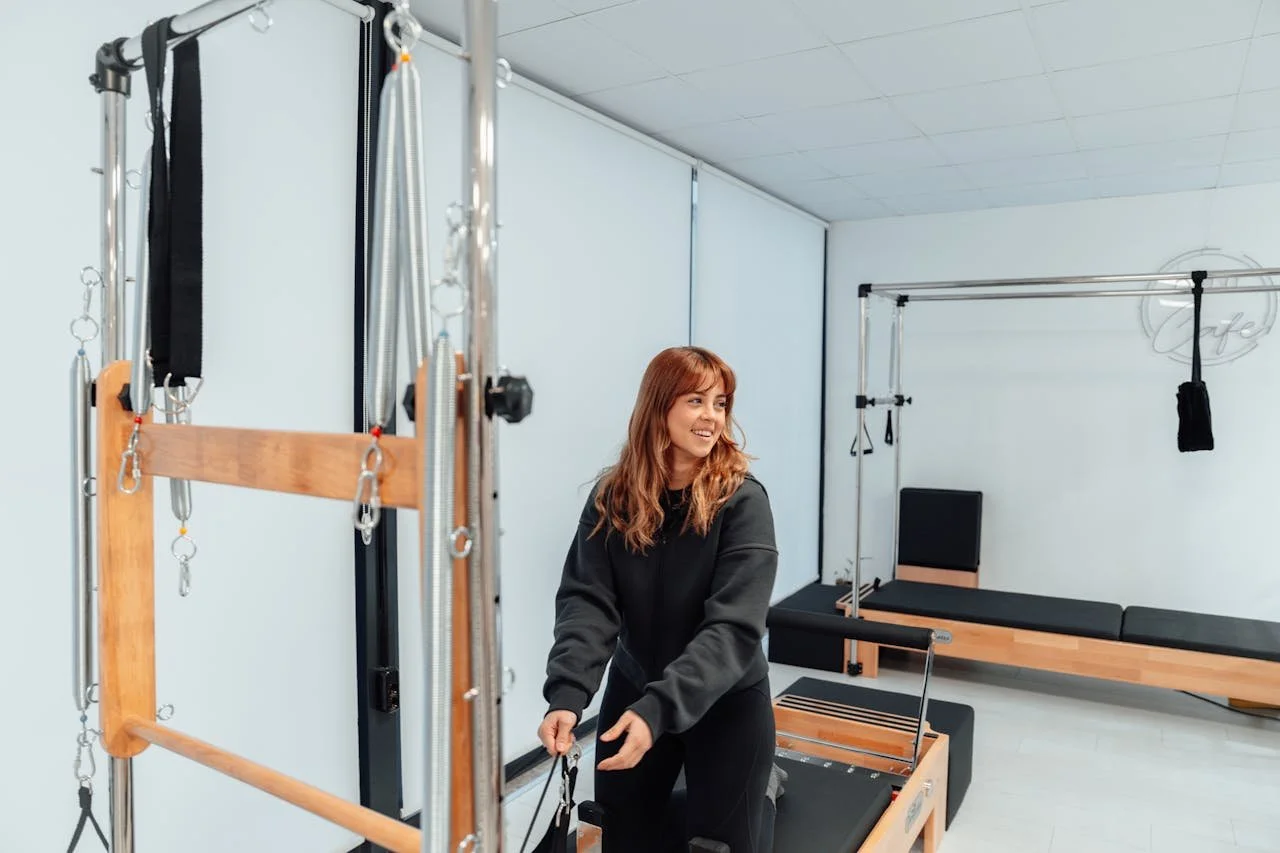
2 to 3 sessions per week. This is the most common starting point and the frequency at which reformer Pilates delivers its most well-known outcomes: improved posture, core strength, and body awareness. A practical example is booking two fixed weekly slots — say, Tuesday and Saturday — then picking up a Thursday class when work allows.
Weight Loss and Body Composition
3 to 4 reformer sessions per week, alongside 2 to 3 cardiovascular sessions. Reformer Pilates builds lean muscle and raises resting metabolic rate over time, but it is not primarily a calorie-burning tool. Pairing it with running, cycling, or swimming accelerates body composition change in a way that either modality alone does not. The NHS physical activity guidelines recommend 150 minutes of moderate activity per week for adults.
Injury Recovery and Chronic Conditions
1 to 3 sessions per week, set alongside a qualified physiotherapist or clinical Pilates instructor. The spring resistance on a reformer can be reduced to make exercises almost entirely unloaded, which is why the method is used in post-surgical rehabilitation and chronic pain management where gym-based training would be contraindicated.
A published review in the Journal of Bodywork and Movement Therapies found consistent evidence that Pilates-based interventions produce statistically significant improvements in pain and functional movement in chronic lower back populations.
Athletes Cross-Training
2 to 3 sessions per week, scheduled after heavy training blocks rather than before them. A footballer working on hip stability or a cyclist addressing thoracic imbalances will see the most benefit by scheduling reformer sessions on active recovery days rather than stacking them on top of peak-effort training.
The Frequency Mistake That Slows Beginners Down
The most common error new practitioners make is starting at once a week, feeling modest progress, and concluding the method is not working. It is not that reformer Pilates did not work. It is that once a week is not enough stimulus to produce the adaptation arc described in the timeline above.
Research on resistance training adaptation consistently shows that training frequency is the primary driver of early-stage results, ahead of session duration or intensity. A practitioner attending twice a week for eight weeks will outperform one attending once a week for sixteen weeks, even though both have completed the same total number of sessions.
If your schedule genuinely only allows one session per week, that is still worth doing, but set your expectations accordingly. One session per week sustains awareness and some mobility benefit. It does not produce the postural and strength changes that draw most people to the method in the first place.
How to Structure Your First 12 Weeks
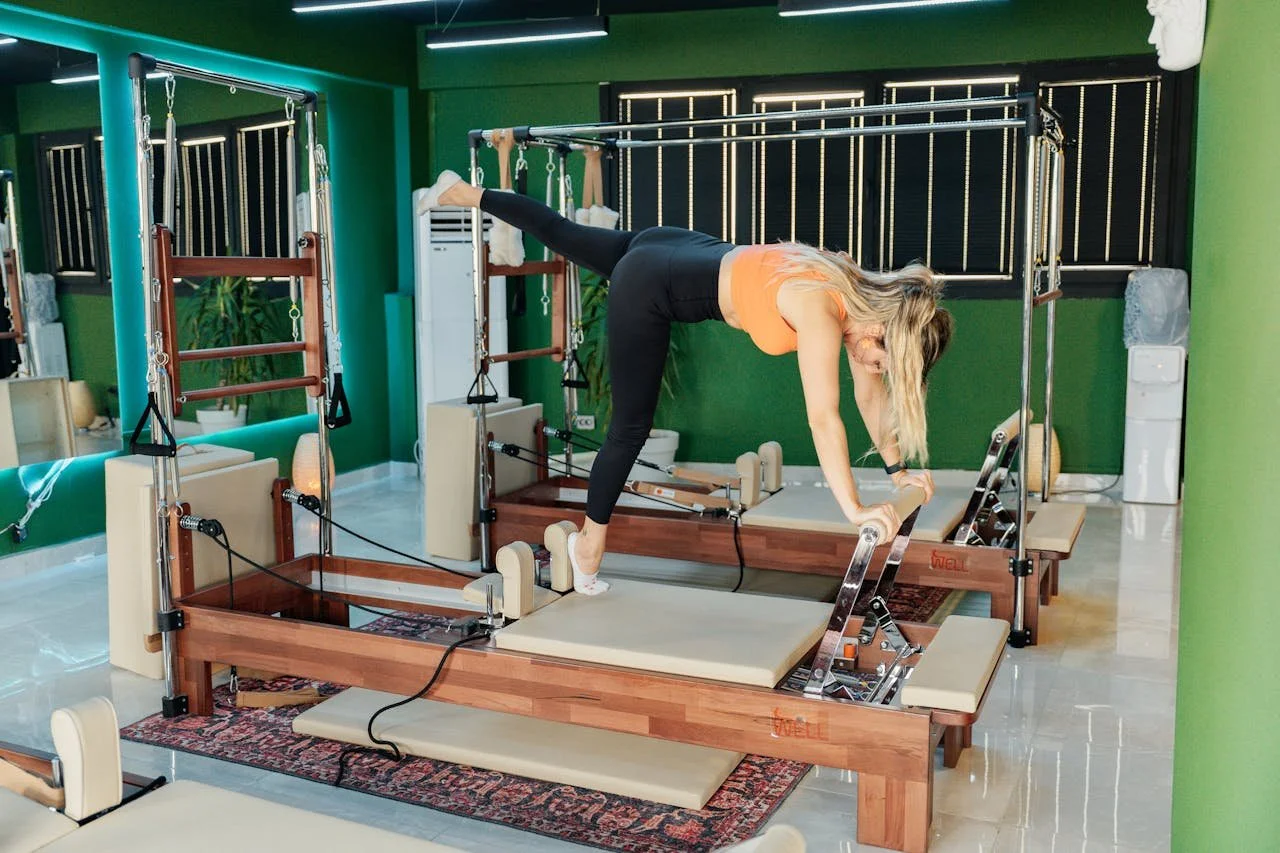
Weeks 1 to 4: Two fixed sessions per week. Book two classes at the same times each week. Consistency of timing matters. A Tuesday morning and a Saturday class that become non-negotiable appointments produce better results than three sessions that are theoretically available but regularly rescheduled.
Week 5: Add a third session. By week five, the foundational movement patterns will feel familiar enough that a third session adds challenge rather than cognitive overload. This is where results start to accelerate noticeably.
Use that third session differently. It does not need to match the intensity of the first two. Many studios offer flow, stretch, or lower-load recovery classes that complement two stronger sessions without adding fatigue. Check the timetable at a studio near you to see what formats are available across the week.
Week 12: Evaluate and commit. At twelve weeks, you have enough data to make an informed decision about your long-term routine. If three sessions per week is producing results and is sustainable, maintain it. If two sessions is all your week realistically supports, that is a defensible ongoing commitment, just be clear-eyed about the pace of progress it produces.
Class Pack or Monthly Membership?
The frequency question and the purchase question are the same question.
Usually, clients on monthly memberships attend more often than those buying class packs, not because memberships change motivation, but because a standing commitment changes scheduling behaviour. A class pack gives you sessions to use when you remember to book. A membership builds the habit that produces the results in the timeline above.
For context, the reformer pilates pricing benchmarks published on Reformer Pilates put the monthly unlimited range at £140 to £220 across UK studios. At three sessions per week, that works out to well under £20 per session.
Conclusion
Two to three sessions per week is the answer for almost every goal, with results becoming noticeable between weeks four and eight and compounding after week twelve. Frequency is the variable that matters most, more than which studio you choose, which instructor you work with, or which class format you prefer.
Get the sessions in at a consistent cadence and the method works. Use theReformer Pilates studio directory to find a studio where that frequency is realistic for your schedule, then commit to twelve weeks and measure from there.
Frequently Asked Questions
Is reformer Pilates 2 times a week enough?
Yes, two sessions per week produces meaningful progress in posture, core strength, and body awareness, especially for beginners. You will notice changes within four to six weeks. Adding a third session accelerates results significantly, but two is a solid and sustainable foundation.
What is the 80/20 rule in Pilates?
The 80/20 rule in pilates refers to the idea that 80% of results come from 20% of the exercises, specifically those targeting core stability, spinal alignment, and fundamental movement control. It is a teaching principle that prioritises quality and precision over volume.
Can Pilates help a weak bladder?
Yes, pilates do help a weak bladder. Both reformer and mat Pilates engage the pelvic floor muscles, which support bladder control directly. Structured Pilates programmes usually produce measurable improvements in pelvic floor strength and urinary incontinence symptoms.
Which is better for arthritis, yoga or Pilates?
The research does not conclusively favour one over the other. Reformer Pilates allows joint-friendly movement through a controlled range with spring-assisted resistance, which supports strengthening without high compressive load. Yoga tends to be more flexibility-focused and may suit those prioritising range of motion over strength.
Can I do reformer Pilates every day?
Technically yes, but not at the same intensity. Daily sessions at full load lead to diminishing returns and overuse complaints. Alternating demanding sessions with lower-load recovery classes is a more effective approach if you want to attend more than three times per week.
How long does it take to see results from reformer Pilates?
Most people notice postural changes within four to six weeks at two to three sessions per week. Visible changes in muscle tone typically appear between weeks eight and twelve. The timeline shortens with higher frequency and lengthens if attendance drops below twice a week.

Author
KARL KNIGHTS
Leading commercial operations for Reformerpilates.com. A pioneering platform transforming the global Reformer Pilates industry. Our mission is to revolutionise how studios, instructors, and enthusiasts connect, creating a vibrant community and driving business growth in the rapidly expanding wellness market.