
Reformer Pilates for Beginners: What to Expect in Your First Class (UK Guide)
You have finally booked a class. Now you are Googling it at 11 pm the night before because you have no idea what you are walking into, what to wear, whether you will be the only person who has never done it, or whether the machine is going to make you look completely lost in front of a room full of people who clearly know what they are doing.
Most beginner guides answer the wrong question. They describe the equipment in detail or list ten introductory exercises, which is useful eventually, but does nothing for the person who just wants to know what their first 50 minutes will actually feel like.
This guide covers exactly that: what reformer Pilates is, what to expect minute by minute in a beginner class, how to prepare, and what you will notice in the weeks after you start.
Key takeaways
Arrive 10 minutes early and tell the instructor it is your first time
Wear fitted clothes; grip socks are required at most UK studios
Expect deep muscular effort, not cardiovascular exhaustion
Two sessions a week for 6 to 8 weeks is where real, consistent change happens
Research shows significant strength and flexibility gains after just 8 weeks of twice-weekly sessions
What Is Reformer Pilates?
The reformer is a sliding carriage fitted with adjustable springs, a footbar, and hand and foot straps. You lie, sit, stand, or kneel on the carriage and move against spring resistance that works in both directions of movement. That bilateral demand is what makes reformer Pilates build strength and stability differently from conventional gym training, and from mat Pilates.
For beginners, the most important thing to understand: this is not cardio. A beginner class is precise and controlled. You will move slowly, feel muscles you did not know you had, and finish feeling worked rather than wrecked.
The method was developed by Joseph Pilates in the early 20th century as a rehabilitation system. Studios listed in the Reformer Pilates studio directory carry that foundation into structured beginner programmes designed for people who have never touched the machine.
What Does a Beginner Reformer Pilates Class Actually Look Like?
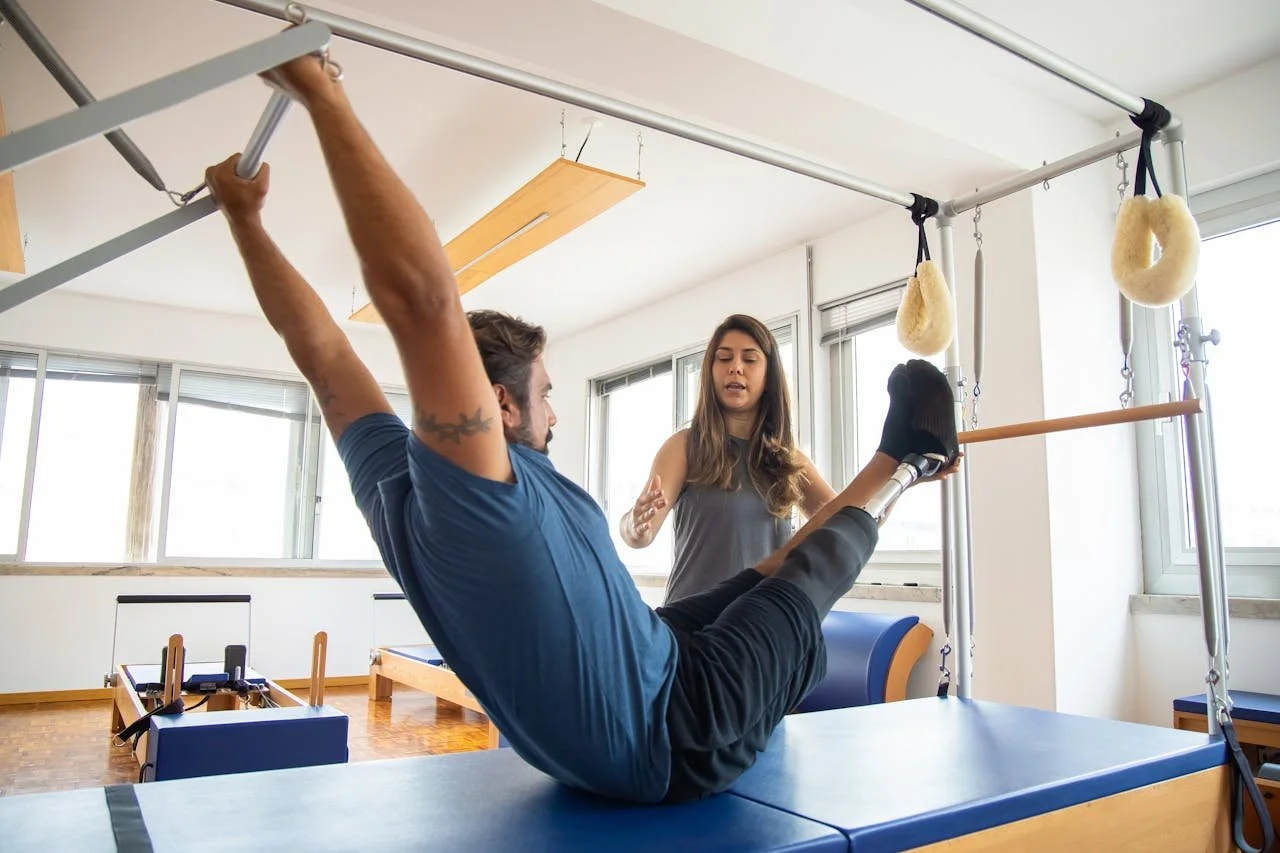
Before Class: Arrive 10 Minutes Early
This is not a suggestion. Your instructor needs to know about any injuries or health conditions before the class starts, not halfway through. Most UK studios require a short health form for new clients. Arriving on time means arriving stressed. Ten minutes early means you can find your reformer, set the headrest, and settle before anyone is watching.
Minutes 0 to 5: Machine Setup and Orientation
Your instructor will walk you through adjusting the footbar, how spring resistance works (usually colour-coded by weight), and how to get on and off the carriage safely. Do not try to memorise everything. Instructors in beginner classes expect to repeat themselves and will correct your form as you go.
You will typically begin lying on your back with feet on the footbar. This is the foundational starting position for the opening exercises.
Minutes 5 to 25: Footwork and Lower Body
The first section focuses on footwork: pushing the carriage away from the footbar by extending your legs, then controlling it back. It looks simple. It is not.
Your instructor will cue you to keep your pelvis neutral, your spine long, and your breath connected to the movement. These are not decorative instructions. They are the difference between correctly loading your legs and core, and accidentally loading your lower back.
A typical footwork sequence moves through three or four foot positions: heels on the bar, ball of foot, and toes. Each shifts the emphasis between the glutes, hamstrings, and calves. Expect your thighs to start burning around the third set. That is normal, and it is the method working.
Minutes 25 to 40: Core, Upper Body, and the Straps
The middle section introduces the straps, looped around your feet or held in your hands. Common introductory exercises include leg circles (feet in straps, drawing slow circles while keeping the pelvis still) and seated or lying arm work against spring resistance.
This is where first-timers feel the coordination demand most sharply. You are managing carriage movement, spring tension, alignment, and your instructor's cues at the same time. The effort here is as much attentional as it is physical. That does ease quickly after a few sessions.
Minutes 40 to 50: Cool-Down and Stretch
The final section almost always includes spinal articulation and a stretch sequence on the carriage. By this point, most first-timers report mild muscle fatigue, warmth through the core and legs, and a genuine sense of calm.
That calm is not accidental. Reformer Pilates requires enough focused attention that it functions as a cognitive interruption to the rest of your day. It is part of why regular practitioners describe it as being as good for stress as it is for the body.
What to Wear to Reformer Pilates
Wear fitted, stretchy clothing. Loose shorts, wide-leg trousers, and oversized tops all cause problems on the reformer: fabric catches on the carriage, rides up during leg exercises, and obscures your alignment from the instructor who needs to see your hips and spine to cue you correctly.
Grip socks are required at most UK reformer studios for hygiene and safety. The carriage and footbar are smooth surfaces, and rubber-grip socks prevent slipping during footwork and standing exercises. Most studios sell them at the front desk, though buying in advance is cheaper. Reformer Pilates stocks the grip sock styles most commonly used in UK studios, available directly on the site.
Leave rings and bracelets at home. They catch on the carriage and straps. A sports watch is fine.
How Hard Is Reformer Pilates for a Complete Beginner?
Harder than it looks, but not in the way most people expect.
The cardiovascular demand is moderate. You will not be out of breath the way you would be in a HIIT class. What you will feel is deep muscular effort through the core, inner thighs, and the stabilising muscles around the shoulder blades and hips. These are muscles most people underuse in daily movement and in conventional gym training.
Most first-timers are surprised by two things:
How much core engagement is required during exercises that appear to be purely leg-based
How tired the small stabilising muscles feel the following day, not the big muscles, but the ones that rarely get directly trained
This is not a reason to be intimidated. It is useful information that tells you the method is targeting something real. A study published in the Journal of Bodywork and Movement Therapies found that Pilates training produced significant improvements in muscular endurance and flexibility after just eight weeks of twice-weekly sessions in previously sedentary adults. The adaptation timeline is faster than most beginners expect.
How Often Should Beginners Do Reformer Pilates?
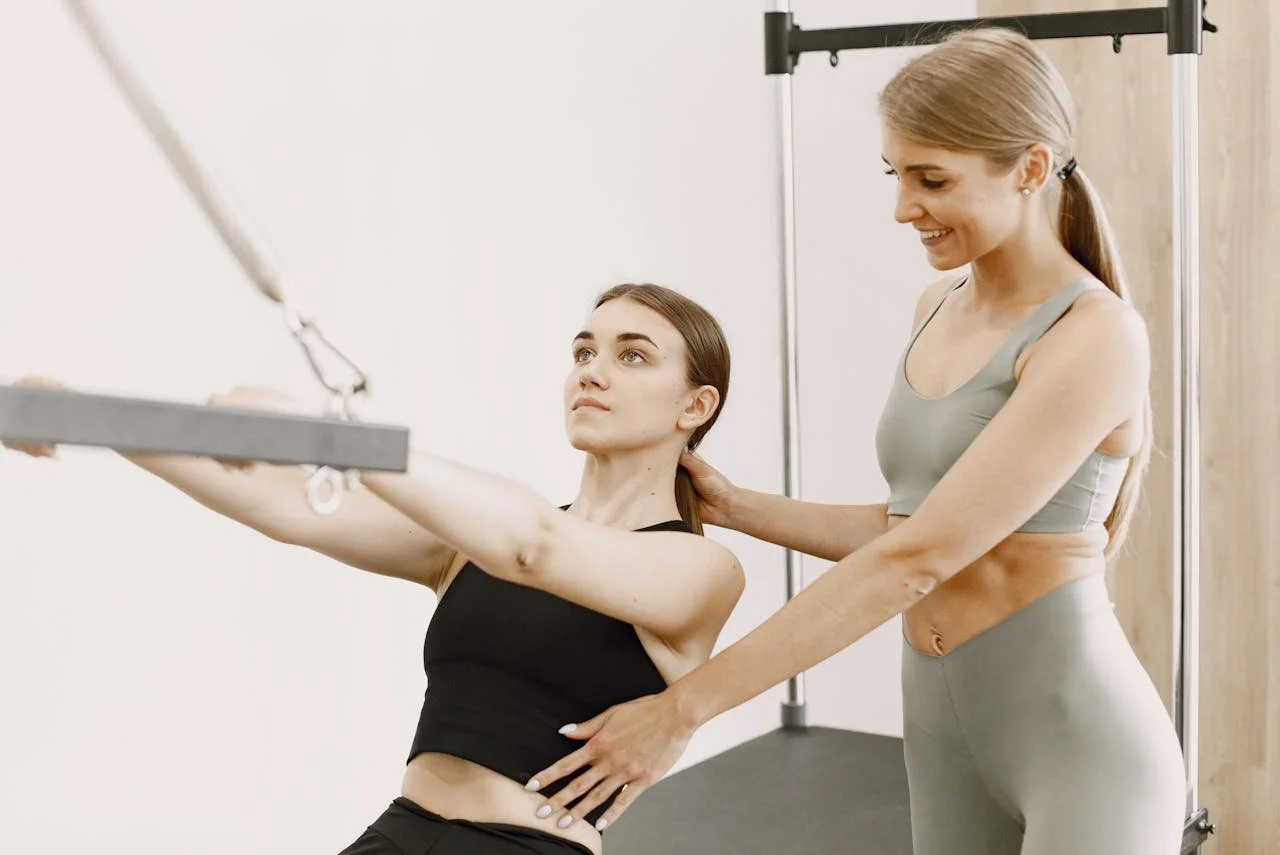
Here’s a beak-down of pilates preferable frequence:
Once a week: Enough to learn the method. You will start recognising exercises after 3 to 4 sessions
Twice a week: Where consistent physical changes begin; aligns with Chartered Society of Physiotherapy guidelines for measurable strength development
Three times a week: When most practitioners notice visible changes in posture, ease of movement, and body composition
Most UK studios offer introductory packages that make three sessions a week financially accessible for the first month. Browse the Reformer Pilates studio directory to compare local options and current introductory offers near you.
What Changes in the First 8 to 12 Weeks
After your first session: Expect to feel muscles you did not know existed. The inner thighs, deep abdominals, and the muscles running alongside the spine are the most commonly reported areas of delayed onset soreness. This fades within 48 hours and reduces significantly after three or four sessions.
After 4 to 6 sessions: The coordination demand drops. You stop consciously tracking every instruction and begin feeling the exercises from the inside. This is what instructors often call "finding your Pilates brain," and it is when the method becomes genuinely enjoyable rather than effortful.
After 8 to 12 sessions: Most beginners notice changes in how they stand, how clothes fit across the waist and hips, and how their lower back feels at the end of a working day. These are consistent, compounding improvements rather than dramatic overnight transformations.
For more on the evidence behind long-term outcomes, the Reformer Pilates benefits section covers the research in detail. If you are also weighing up home practice, the home reformer buying guide explains the key differences between residential and studio-grade machines.
Common Questions Beginners Have Before Their First Class
Will I be the only person who has never done this?
No. Beginner and foundations classes are designed specifically for first-timers. Everyone in the room is at roughly the same starting point.
What if I cannot keep up?
The spring resistance is fully adjustable and your instructor can modify any exercise. Falling behind the pace is not a failure; it is information for your instructor to work with.
Do I need to be flexible or fit to start?
No. Reformer Pilates builds both over time. There is no prerequisite level of fitness or flexibility for a beginner class.
Is it safe if I have a bad back or previous injuries?
Tell your instructor before the class starts. Many people come to reformer Pilates specifically because it is low-impact and can be adapted around injuries. Always check with your GP or physiotherapist if you have a serious or recent injury.
Before You Go: First-Class Checklist
Book a class labelled beginner, foundations, or intro, not a general reformer session
Arrive ten minutes early and tell the front desk it is your first time
Wear fitted clothing and bring or buy grip socks
Eat a light meal one to two hours before, not immediately before or on an empty stomach
Tell your instructor about any injuries before the class starts
Do not adjust the spring resistance mid-exercise without checking first
Tell your instructor if something hurts: muscle fatigue is expected, joint pain is not
Your first reformer Pilates class is about orientation, not performance. Show up, say it is your first time, and let the session do its job.
Find a beginner reformer Pilates class near you using the UK studio finder on Reformer Pilates.
Frequently Asked Questions
Is reformer Pilates suitable for a complete beginner?
Yes. The spring resistance is adjustable, exercises can be modified, and a proper beginner class is paced for people who have never used the machine. Book a session labelled beginner or foundations rather than a general class.
Does Pilates help lower cortisol?
There is supporting evidence linking regular Pilates practice with reduced perceived stress and lower cortisol markers, though the research base remains smaller than for general exercise science.
Can Pilates help a weak bladder?
Reformer Pilates trains the pelvic floor as part of its core activation work, and clinical evidence supports it as an effective approach for improving pelvic floor strength and reducing stress urinary incontinence.
Can reformer Pilates improve bone density?
Resistance-based exercise is a primary evidence-backed intervention for maintaining bone mineral density, particularly in postmenopausal women. The spring resistance in reformer Pilates loads the spine, hips, and limbs in ways that support bone remodelling.
How is reformer Pilates different from mat Pilates?
Mat Pilates uses bodyweight only. The reformer adds spring resistance in both directions of movement, meaning your muscles work on both the push and the pull. This creates a deeper strength and stability challenge and allows for a much wider range of exercises.
Why is reformer Pilates more expensive than other fitness classes?
Reformer machines are costly to purchase and maintain, classes are kept small for quality of instruction, and studios invest in certified instructors. The smaller class sizes mean more individual attention than most gym-based exercise formats.

Author
KARL KNIGHTS
Leading commercial operations for Reformerpilates.com. A pioneering platform transforming the global Reformer Pilates industry. Our mission is to revolutionise how studios, instructors, and enthusiasts connect, creating a vibrant community and driving business growth in the rapidly expanding wellness market.