
How Much Space Do You Need for a Reformer Pilates Studio? (Reformers per Sq Ft)
You have found a space you like. The rent is workable, the location is right, and you are already picturing where the reformers go. Then you pull up the floor plan and the question hits: is this actually big enough?
Getting the space calculation wrong is one of the most expensive mistakes a studio owner can make. A studio that fits six reformers but has no room for reception, storage, or a waiting area is not a six-reformer studio in practice. It is a difficult working environment that costs you in client experience and instructor retention before year two.
This guide gives you a room-by-room breakdown of how much space a reformer Pilates studio actually needs, plus a reformer count cheat sheet you can take to a viewing.
Key Takeaways
Allow 40-50 sq ft per reformer on the workout floor only
Add 300-500 sq ft for reception, changing, storage, and circulation
A standard 8-reformer studio needs approximately 900-1,100 sq ft total
Room shape matters as much as total square footage
Minimum ceiling height is 8 ft; 10 ft is the comfortable standard
43% of studio owners say finding a suitable space was their biggest challenge
The 40-50 Sq Ft Rule: What It Covers (and What It Does Not)
The standard planning figure across the UK boutique fitness sector is 40 to 50 square feet per reformer. This accounts for three things: the machine footprint, the space a client needs to move through a full range of exercises on both sides, and the clearance an instructor needs to move between beds to cue and correct.
A standard commercial reformer measures approximately 8 ft x 2 ft (roughly 16 sq ft) at rest. The 40-50 sq ft figure accounts for carriage extension during exercises such as footwork, long spine, and short spine, plus lateral clearance for side-lying work and the aisle space between rows.
Compress below 35 sq ft per reformer and instructors are stepping over clients, and clients are in each other's space through every rep. That affects session quality in ways that are hard to recover from with branding or pricing.
The critical point most owners miss: the 40-50 sq ft rule applies to the workout floor only. Reception, changing, storage, and circulation are all on top of that number. Every studio owner who has used the raw per-reformer figure to calculate their total space requirement has had the same rude surprise when they move in.
Reformer Count by Studio Size: The Cheat Sheet
Use this table when viewing spaces. The total studio size figures include workout floor plus front-of-house essentials (compact reception, storage, basic changing), not just the room the reformers sit in.
| Reformers | Workout Floor (sq ft) | Total Studio Size (sq ft) | Best Suited For |
|---|---|---|---|
| 4 | 180–200 | 450–600 | Pilot launch, private PT, shared-space model |
| 6 | 270–300 | 700–900 | Small boutique, single instructor, owner-operated |
| 8 | 360–400 | 900–1,100 | Standard UK boutique studio (most common launch size) |
| 10 | 450–500 | 1,100–1,400 | Full-service studio, two instructors, retail space |
| 12 | 540–600 | 1,400–1,600 | High-utilisation studio, multiple class formats |
Most new UK reformer studios open with 8 reformers in approximately 1,000 sq ft. That configuration has the most favourable unit economics: enough reformers to fill classes at meaningful revenue per session, in a space size that keeps rent manageable before membership income stabilises. Our studio setup guide walks through the full checklist.
The Functional Zones Your Floor Plan Must Account For
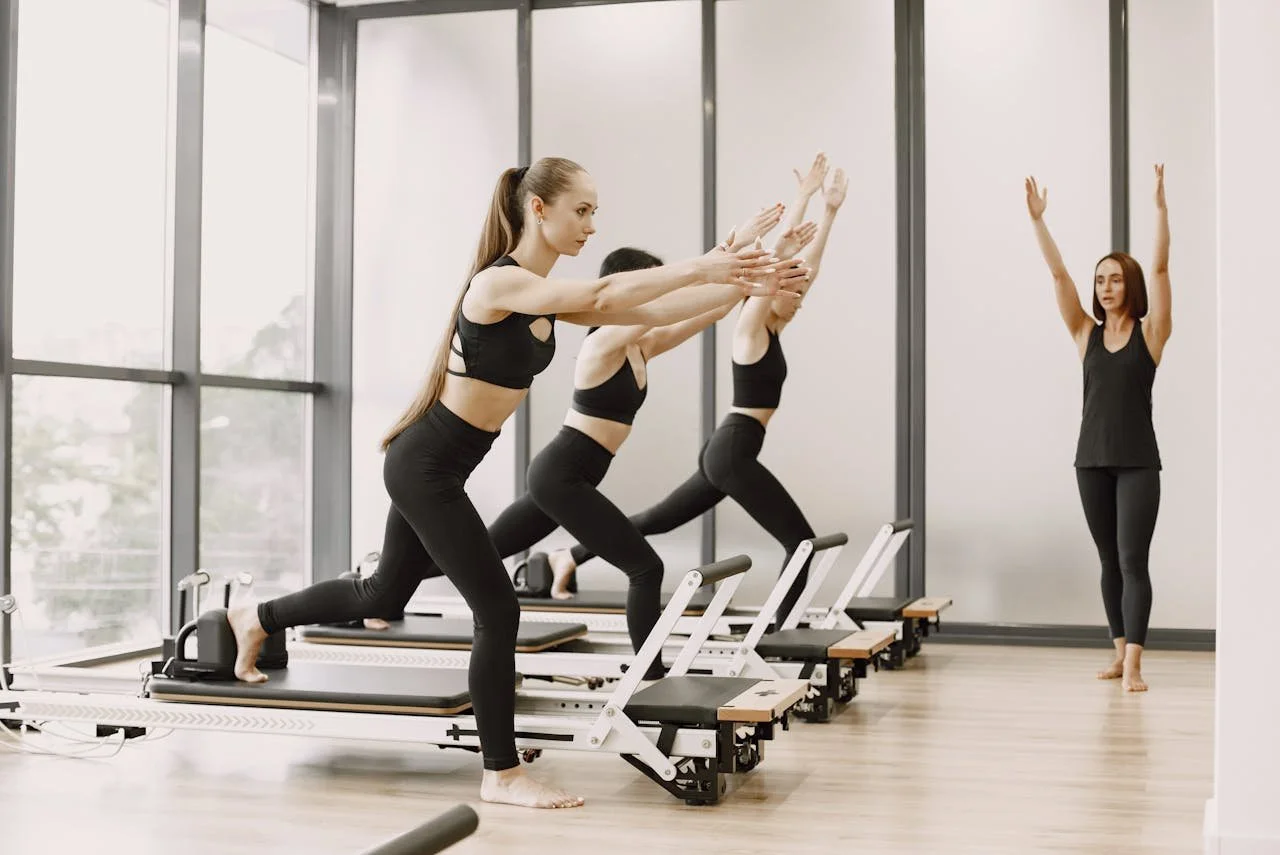
Every space you view needs to be assessed against the full list of zones a working studio requires. Each one eats into your reformer count if you are not accounting for them upfront.
Reception and Client Arrival (60-100 sq ft)
Even a minimal front-of-house, a desk, a screen for check-in, and a shelf for retail, occupies 60 to 100 sq ft. Studios that skip this end up with clients crowding the studio floor before class, disrupting the session already in progress. A compact but dedicated reception area also signals professionalism from the first visit, which matters more than most owners expect for early membership conversion.
Changing and Equipment Storage (100-150 sq ft)
A full changing room with showers is a significant commitment that many boutique studios in urban UK locations choose to skip, particularly where clients travel from work. A practical compromise: two to three individual changing cubicles at roughly 15-20 sq ft each, plus a bank of secure lockers.
Equipment storage is where studios consistently underestimate. Reformers, blocks, straps, and grip socks for 12 clients all need a home. Budget at least 40 to 60 sq ft for equipment storage or you will end up stacking things in the corners of the studio floor, which is both a safety hazard and a visual one.
Instructor Circulation (Built Into Aisle Width)
The aisle between reformer rows needs to be at least 3 ft wide for an instructor to move freely during a class. Many owners design layouts on paper and forget that an instructor in motion is not the same as an instructor standing still. A tight layout that looks fine on a floor plan becomes genuinely difficult to teach in.
Waiting Area (50-80 sq ft)
Clients arrive early. The class before theirs may be running slightly long. Without a designated space to wait, even just a bench and two chairs in a small lobby, clients stand awkwardly in a doorway or push into the studio mid-session. Budget 50 to 80 sq ft for a minimal waiting area, or design your reception so it doubles as one.
Why Room Shape Can Matter More Than Square Footage
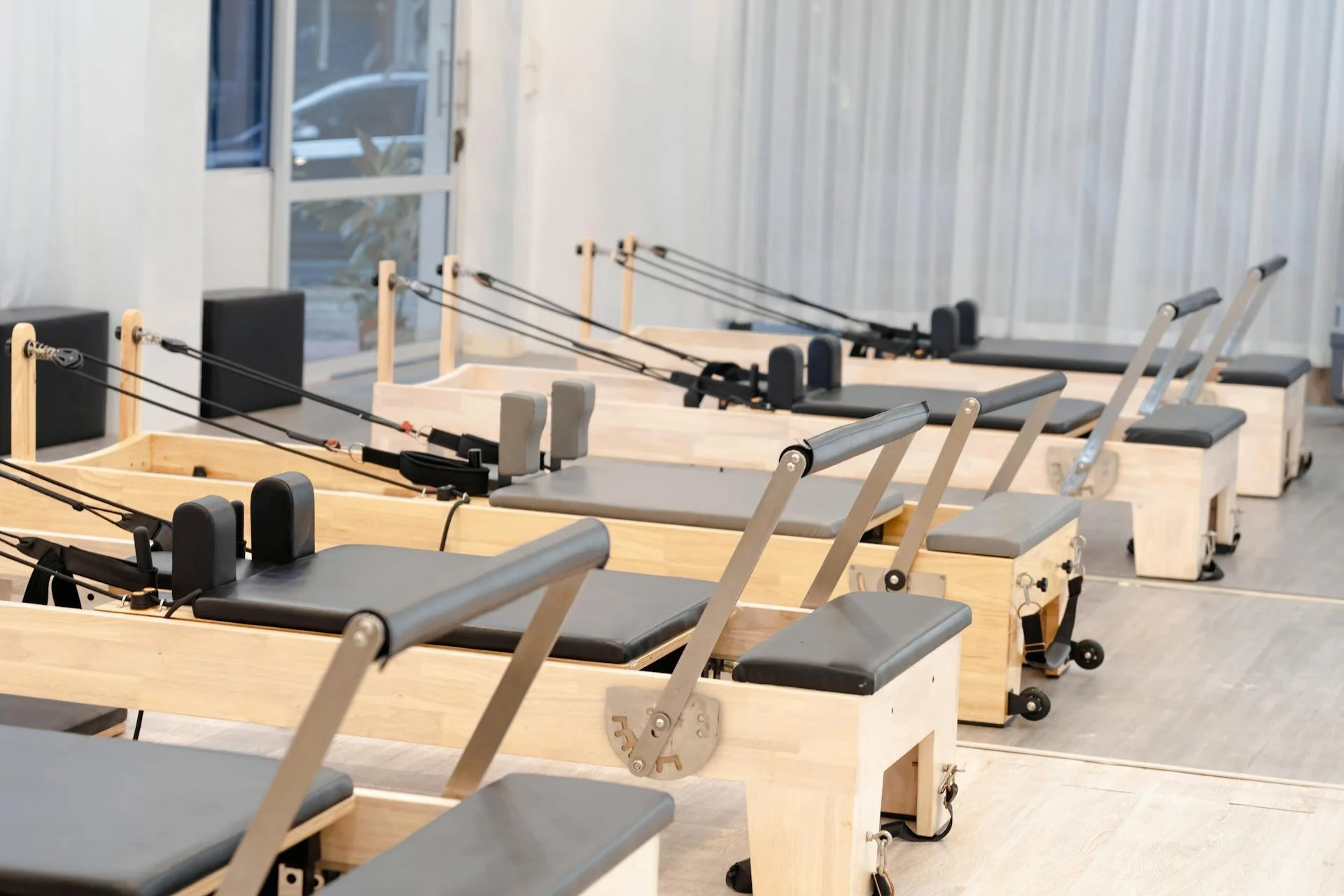
Square footage is not the whole story. A 1,000 sq ft space that is long and narrow will fit fewer reformers usefully than a 1,000 sq ft space that is close to square, because reformers arranged end-to-end in a single row cannot be taught efficiently from one position.
The ideal layout for eight reformers is two rows of four, arranged parallel, with a 3 to 4 ft aisle between rows and at least 2 ft of clearance at the head and foot ends. That configuration fits comfortably in a room approximately 30 ft wide by 35 ft long, which is 1,050 sq ft of usable floor.
If the room you are viewing is 15 ft wide and 65 ft long, the same square footage produces a single-row layout that is awkward to teach and claustrophobic to train in.
When viewing a space, measure the usable width before you measure the total area. Columns, load-bearing walls, fire exits, and HVAC ducts all reduce usable width in ways that do not show up on a headline square footage figure. A 1,200 sq ft room with a column in the centre of the floor is a different planning problem to a 1,000 sq ft room with clear walls on all sides.
Minimum Ceiling Height for a Reformer Pilates Studio
Reformer Pilates does not involve the same overhead movements as aerial or barre disciplines, but ceiling height still matters more than most pre-lease checklists acknowledge.
The minimum workable ceiling height is 8 ft (approximately 2.4m). Below this, standing exercises on the reformer, footwork variations, standing splits, box work, create a genuine health and safety issue for taller clients and a liability question for your insurance.
10 ft (3m) is the comfortable standard. At this height, the room breathes, lighting can be layered properly, and the space reads as a premium environment rather than a converted storage unit. Many converted retail units and older commercial properties in the UK sit between 9 and 11 ft, which is workable. Industrial and former warehouse units often exceed 12 ft, which is visually impressive but adds to heating costs and acoustic challenges that need budgeting for.
If you are viewing a basement unit, confirm the floor-to-ceiling height in person, not from a letting agent's description. A lower ground floor in a Victorian building can mean anything from 7 ft to 9.5 ft, and the difference matters.
Confirm Your Layout Before Signing a Lease
Signing a lease before confirming that your intended reformer configuration actually fits the space is one of the most avoidable mistakes in studio planning. It happens more than it should, usually because owners fall in love with a location and skip the spatial due diligence.
According to the Reformer Pilates survey, 43% of studio owners found finding a suitable space their biggest challenge. Spatial planning at the viewing stage, not after heads of terms are signed, is what separates the majority who struggled from those who did not.
Before you commit, you need three things:
A scaled floor plan of the space. Ask the agent or landlord. If they do not have one, measure it yourself and draw it on graph paper.
The exact dimensions of your chosen reformer bed with carriage fully extended.
A layout showing reformers, instructor aisles, reception, storage, and waiting, drawn at scale, not as an approximation.
If all three fit comfortably, the space works. If you are moving furniture around on the plan trying to make it fit, it will not work in practice either.
How Many Reformers Should You Open With?
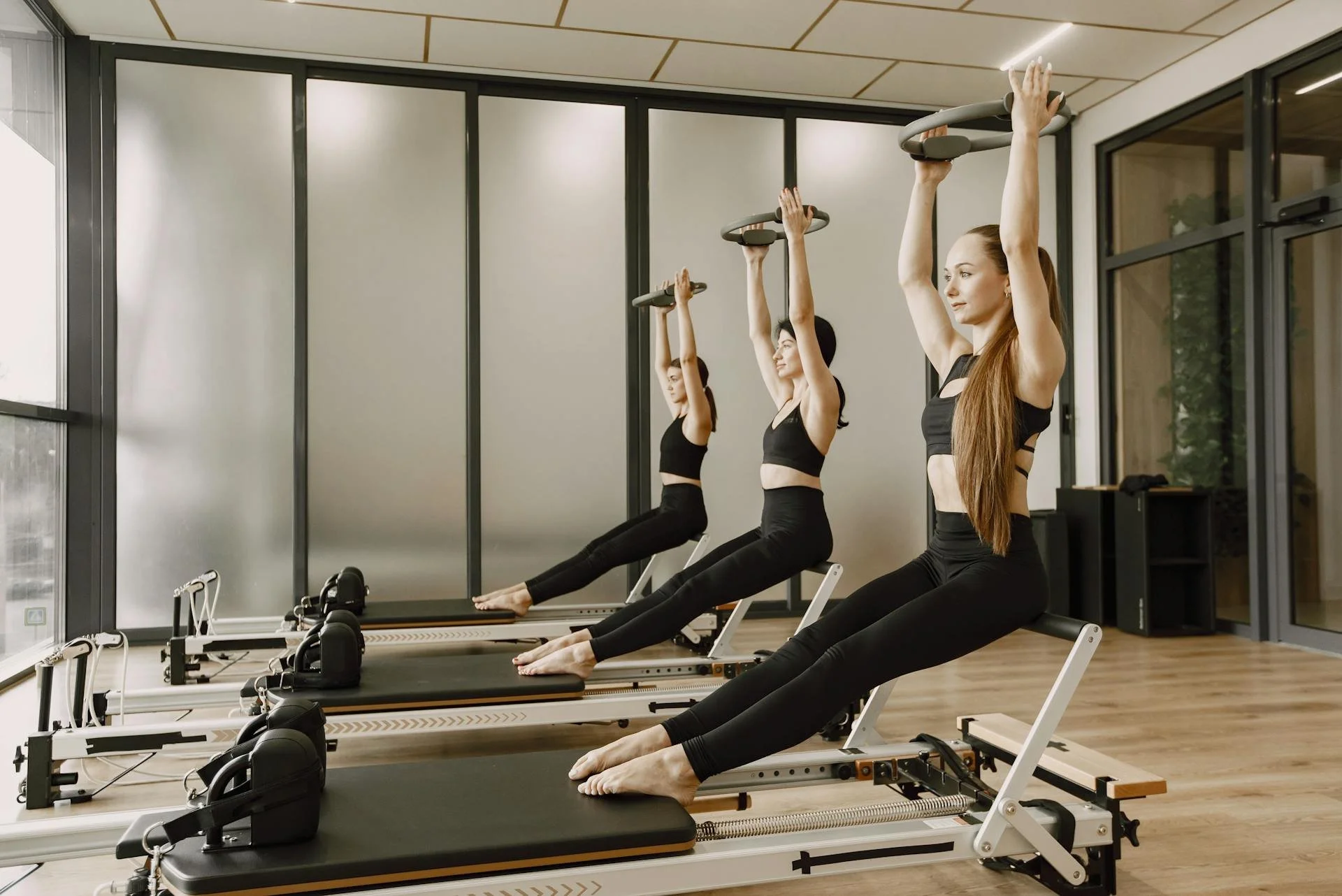
Start with eight reformers unless your pre-opening demand data says otherwise. Eight beds at 70% utilisation across a standard timetable generate meaningful revenue. Eight beds at 40% utilisation is a profitable studio at a lower occupancy threshold than ten or twelve beds require to break even.
Starting smaller and expanding is almost always easier than starting large and cutting costs. A studio that opens with twelve reformers and consistently runs six of them empty is carrying dead rent and dead capital simultaneously.
The case for opening larger is strongest when:
You have strong pre-opening waitlist data
A corporate or private hire revenue stream is confirmed before opening
The rent differential between a smaller and larger space is small and the lease allows expansion in place
If you are signing a ten-year lease on a 1,400 sq ft space because it was available rather than because demand is there, the economics are working against you from day one.
The Bottom Line on Studio Space Requirements
Allow 40 to 50 sq ft per reformer on the workout floor, then add 300 to 500 sq ft for reception, changing, storage, and circulation. A standard eight-reformer studio lands at approximately 1,000 sq ft total. Get the spatial planning right before you fall in love with a location, because the lease you sign on an undersized or poorly shaped room is a constraint that compounds every month you trade.
When you are ready to equip the space, explore the commercial reformer beds and studio bundles at Reformer Pilates, or book a meeting with the team to work through layout and equipment options before you commit to a floor plan.
Frequently Asked Questions
How much space do you need for a reformer Pilates studio?
Allow 40 to 50 sq ft per reformer for the workout floor, plus 300 to 500 sq ft for reception, storage, changing, and circulation. A standard eight-reformer boutique studio needs approximately 900 to 1,100 sq ft in total.
How much space is needed per reformer?
Each reformer requires 40 to 50 sq ft of dedicated workout floor when fully in use, accounting for machine footprint, carriage extension, lateral movement, and instructor access on both sides. Compressing below 35 sq ft per reformer creates a layout that is difficult to teach and uncomfortable to train in.
What is the 80/20 rule in Pilates studio business?
In a studio context, the 80/20 rule describes the pattern where roughly 80% of revenue comes from 20% of clients, typically those on recurring memberships. It means membership conversion and retention are higher-value activities than chasing drop-in volume.
Is reformer Pilates good for high cortisol?
Reformer Pilates is widely considered a lower-cortisol exercise modality compared to high-intensity training, as it emphasises controlled movement, breath, and neuromuscular precision. Clients managing stress-related health concerns should consult a healthcare professional alongside any exercise programme.

Author
KARL KNIGHTS
Leading commercial operations for Reformerpilates.com. A pioneering platform transforming the global Reformer Pilates industry. Our mission is to revolutionise how studios, instructors, and enthusiasts connect, creating a vibrant community and driving business growth in the rapidly expanding wellness market.