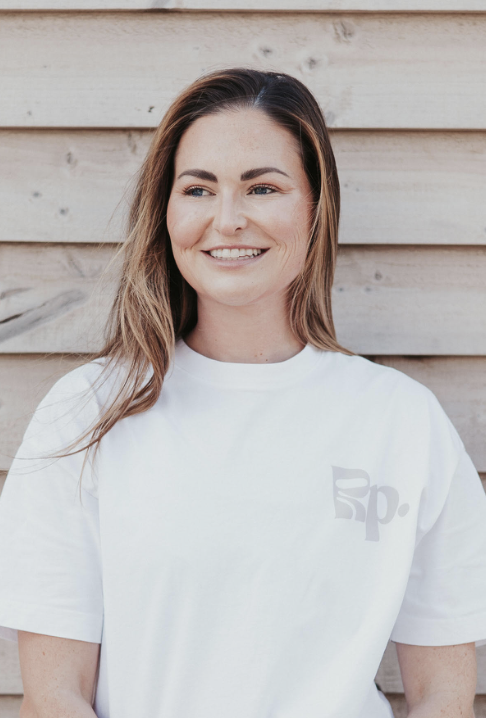
Opening a Pilates studio and growing a Pilates business are, I’ve discovered, two very different things.
When I opened my first Radiant studio, I was on maternity leave with my son and if I’m completely honest, I had no grand plan involving multiple locations, a franchise, an activewear brand or everything Radiant has since become. I knew what I wanted the studio to feel like, I knew the type of Pilates experience I felt was missing locally, and I was prepared to work incredibly hard to make it happen.
At the beginning, that was enough.
When you have one small studio, you can hold an enormous amount of the business in your own head. You know the members. You know which classes are filling. You know when something needs ordering. You know the instructors. You know if something looks slightly wrong when you walk through the door.
And if there’s a problem? You fix it.
The problem is, none of that is particularly scalable.
As Radiant has grown, probably the biggest lesson I’ve learnt is that the things that make you good at opening your first studio can actually become the things that hold you back from growing it.
You cannot be the system
For a long time, I was essentially Radiant’s operating system.
If someone didn’t know something, they asked me. If something went wrong, I sorted it. If there was a process, there was a fairly good chance that process existed somewhere inside my head rather than in a document anyone else could actually access. That works brilliantly until it doesn’t.
I remember getting calls early in the morning from instructors who didn’t know how something worked, and initially my reaction would be frustration. Why are you calling me at 6am about this? Eventually I realised I was asking the wrong question- if someone needs to call me at 6am because they haven’t been given the information they need to do their job, that's probably not a team problem. It's a systems problem and ultimately, that's my responsibility.
We now have much clearer opening and closing procedures, instructor onboarding, health and safety information, class structures, cleaning schedules and operational documents. None of it is particularly glamorous, and it certainly doesn't make for an exciting Instagram Reel, but it's probably some of the most important work we've done.
Because the aim isn't to build a business where everyone needs me, it's to build one where they don't.
Your team becomes your brand
I think this is particularly important in a Pilates business because the product isn't really the reformer, the beautiful studio or even the class itself, it's how somebody feels when they're there.
As you grow - if you are an owner-instructor led studio, you physically can't teach every class or welcome every new member or be in every studio and so your instructors and studio teams become the people delivering the brand you created.
That has made me think very differently about recruitment and training… of course qualifications and technical ability matter, but so does energy. Can somebody read a room? Do they remember names? Does a nervous first-timer leave feeling comfortable? Do members feel seen? Would someone want to book that instructor again? Those things are much harder to put into an operations manual, but they're often the reason someone chooses your studio over another one.
As we've grown, I've realised that protecting the member experience matters just as much as protecting the visual brand, you can have the nicest logo in the world but if someone has a rubbish experience in your studio, that's what they'll remember.
Busy doesn't necessarily mean profitable
This has probably been one of my biggest business lessons.
A full class looks successful. A growing turnover looks successful. Opening another location definitely looks successful.
But none of those things automatically mean you have a healthy business.
Now I pay far more attention to things like occupancy, revenue per class, instructor cost, retention and the actual cost of operating each location. I've also learnt the slightly painful lesson that the money sitting in your bank account isn't necessarily your money. VAT, payroll, rent, utilities, suppliers, tax and approximately 400 other things all have their eyes on it.
Growth also has a habit of swallowing cash - our most recent Exeter expansion cost £53,842.25. I know that number very well. But the biggest lesson wasn't simply how much the fit-out cost. It was that we were paying rent and bills while part of that space wasn't generating turnover. This has completely changed how I'm approaching future locations. I'm now much more conscious of the gap between getting the keys and actually opening the doors. Every week you're paying for a commercial space that isn't trading is a cost that adds absolutely nothing to the member experience.
Sometimes the expensive lessons are the ones you remember best.
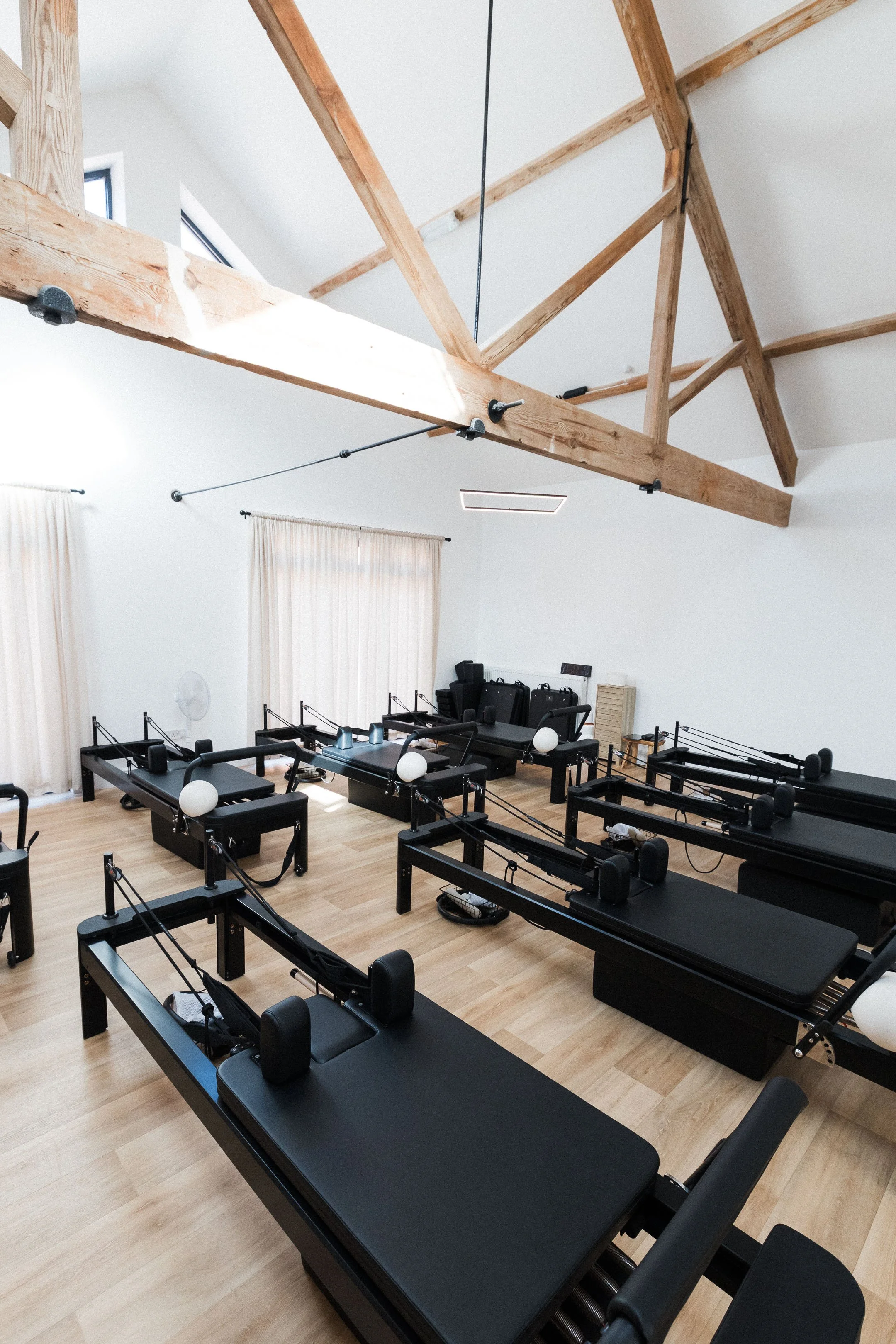
Radiant Pilates studio
Growth exposes everything
When you have one studio, a slightly clunky process is annoying. When you have multiple studios, it becomes a problem. Growth has exposed every part of Radiant that wasn't quite as organised as I thought it was - stock, cleaning, maintenance, instructor communication, marketing, timetables, member communication... Who is responsible for what? What happens when something goes wrong?
Suddenly, “Fern normally sorts that” isn't a particularly useful business process.
I've had to become much better at asking: if we opened another five studios tomorrow, would this still work? Quite often, the answer is no. That doesn't mean you need corporate-level systems when you've got one reformer studio. I actually think you can overcomplicate a small business very quickly. But I do think it's worth building good habits earlier than you think you'll need them. Document the things you repeat, track the numbers that actually matter, make responsibilities clear, build processes somebody else could follow… your future self will be very grateful.
Letting go is a skill in itself
This is the lesson I'm currently learning.
For a long time, being involved in everything was genuinely useful. Radiant was new and I needed to understand every corner of the business, but there comes a point where being involved in everything stops being a strength. I've recently handed much more of the day-to-day management of our Taunton and Exeter studios to Sara, who has been part of Radiant since the very beginning. Years ago we were walking around local villages dropping flyers with our children in tow. Now she's helping me run two studios. That's quite a full-circle moment.
Handing things over hasn't come naturally to me. I like knowing what's happening. I'm very productivity focused, and I have a slightly irritating ability to notice approximately 700 tiny things whenever I walk into one of the studios. But I'm learning that there's a difference between delegating responsibility and abandoning accountability. There are things I will probably always keep close: the numbers, the financial position of the business, the bigger decisions and an understanding of what's happening across the brand... But I don't need to personally solve every operational problem.
The real test came recently when I took a full day off, and absolutely nothing happened. The studios opened, classes ran, problems were solved, members came and went. Radiant carried on perfectly well without me. There was a tiny part of my founder brain that found that mildly offensive... the much bigger part knew it was exactly what I'd been working towards.
Community becomes even more important as you grow
I think one of the biggest risks with expansion is becoming so focused on growth that you lose the thing people originally loved. For Radiant, that has always been community. We're growing the business, but I never want someone walking into one of our studios to feel as though they've entered a faceless fitness chain. I want people to be known. I want new members to feel comfortable. I want the studios to have personality. I want our events, instructors and spaces to feel connected to the communities they're in, and I think maintaining that becomes harder, not easier, as you grow.
You have to become much more intentional about the things that happened naturally when there was only one location. Growth isn't just asking, “How do we get more people through the door?” It's also asking, “How do we make sure the people already here still feel the same way about us?”
I don't think you ever reach the point where you feel completely ready
If you'd told me when I opened that first little studio what Radiant would become in such a short space of time, I probably wouldn't have believed you, and I definitely wouldn't have felt qualified for it. The truth is, I'm still learning all of this while I'm doing it. There are decisions I would make differently, there are things I've spent too much money on, there are systems I should have created sooner and there are moments I've tried to do far too much myself. But I also think that's business - you make the best decision you can with the information you have, and then the business teaches you what you need to know next.
If I could give one piece of advice to somebody who has opened their first Pilates studio and is starting to think about growth, it would be this:
Don't just ask yourself how you can make the studio busier. Ask yourself how you can make the business stronger.
Build the team. Know your numbers. Protect the member experience. Put systems in place before you're desperate for them. And slowly start removing yourself as the answer to every question.
Because opening a successful Pilates studio is one achievement.
Building one that can continue to grow without requiring every hour of your life is an entirely different one.
And that's the part I'm still figuring out.
30 Blogs in 30 Days
Throughout October, we’re sharing one new blog every day, bringing together studio owners, instructors and industry experts to share their experiences, knowledge and perspectives on the Pilates industry.
Day 19 of 30, come back tomorrow for the next blog.