There’s a lot of conversation in the studio world about finding your niche: Who is your studio for? What makes it different? How do you stand out?
These are useful questions. But I don’t think every Pilates studio needs to choose one narrow group of people and build its entire offer around them.
A studio can have a clear identity without being exclusively classical, dynamic, for people over 50, or people with a particular health condition. You don’t have to choose a niche to know what matters to you, the experience you want to offer, and what you hope clients will gain.
For us, it comes back to this: we want to help people move and feel better. That takes time, good teaching, and a willingness to keep showing up. It also means being honest about who is most likely to value what we offer.
We’re here for the journey
Pilates is often presented on social media as something you can try once and immediately feel transformed by. A good class can leave you feeling taller, stronger, or more connected to your body. But lasting change comes from building understanding and strength over time.
We want clients to learn, progress, and develop a relationship with movement that supports them beyond a single class. That journey requires an investment of time to practise and become familiar with the work, as well as money to access the teaching and support that make progress possible.
That doesn’t mean everyone needs the same schedule, or that progress will look the same for every person. It does mean being realistic: if someone is looking for a quick fix or a dramatic result after a handful of sessions, our approach may not be what they’re looking for.
We’re not a drop-in class service built around occasional attendance without a wider sense of progression. And while we care about the atmosphere and enjoy a good playlist, music and aesthetics aren’t the heart of what we offer. The teaching is.
A clear identity doesn’t have to mean a narrow niche
Clients come to us for many reasons. Some want to build strength; some are returning after an injury or a break from exercise; others want to move with more confidence, learn the method properly, or make time for themselves each week.
They don’t all fit into one neat category. What connects them is that they value thoughtful teaching and are open to being part of a process.
At The Pilates Company, we offer Mat and Reformer Pilates, private sessions, and classes at different levels. Our identity isn’t based on serving only one type of person; it’s shaped by how we teach: in small classes, with personal attention, knowledgeable teachers, and a belief that Pilates is something to learn and develop. We also offer workshops on specific areas, including back pain, scoliosis, bone health, and hypermobility. Other workshops focus on understanding the “why” behind pilates. These workshops help clients deepen their understanding of their bodies and take more control of their movement journey. It becomes a two-way street: we understand them better, and they learn how to help themselves more.
That’s different from trying to offer everything to everyone. We can welcome people with different goals while still being clear that we care about the quality of the teaching, the support we provide, and the progress clients make over time.
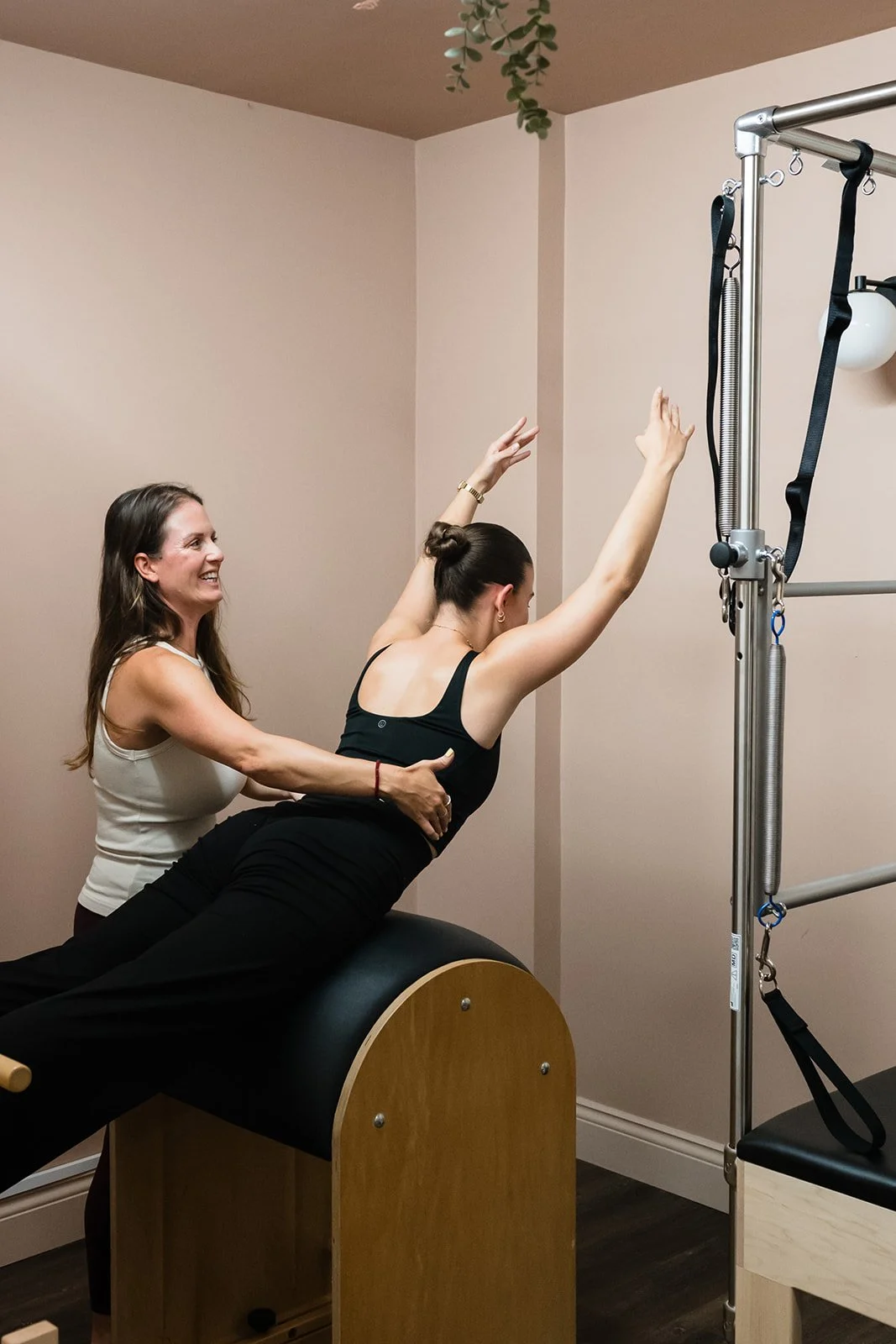
Joni Jacobs teaching a Pilates class at The Pilates Company
Let your values shape the experience
Your studio’s identity isn’t just your logo, colours, or website copy. It’s what happens when someone walks through the door.
Do they know where to go? Are they greeted warmly? Does the teacher notice when they’re uncertain or need a different option? Are clients helped to understand what they’re doing, rather than simply being led through a sequence? For us, having a dedicated Client Relationship Manager, a WhatsApp channel clients can message, plenty of community events, and employees invested in the success of the business means clients feel supported and connected to the studio.
Those everyday moments show people what your studio is like. They also help the right clients recognise that it may be somewhere they can settle in, learn, and keep coming back.
We know many people need support finding their starting point. Our six-week Foundation Course begins with a one-to-one onboarding assessment, followed by a access to our weekly programme of classes. It gives clients time to become familiar with the studio and classes, the language, and the way we teach, rather than expecting them to work everything out in a busy class.
It’s one way we put our values into practice. We want clients to feel supported, but we also want them to understand that building confidence and skill is a process.
Be clear about what you do and what you don’t
It can feel uncomfortable to say that your studio isn’t right for everyone, but clarity helps people make a good choice.
If your offer is centred on consistent teaching and gradual progress, say so. Explain what a new client can expect, how classes are structured, what support is available, and how to begin. If your approach asks for regular attendance or an introductory course, make that clear too.
Some people will be looking for a casual drop-in, a quick workout, or a class chosen mainly for its atmosphere. There are plenty of places that serve those preferences well. We don’t need to criticise them or pretend to be the same; we can simply be honest that our focus is different.
Pay attention to what clients value
If you’re unsure how to describe your studio, listen to your clients. What do they say has made a difference? Why did they choose you? What has helped them stay?
You may hear that they value being remembered, learning how to adapt an exercise, feeling more confident in their body, or having teachers who understand their progress. Those details can be more revealing than a long list of class types.
Look, too, at what your team does especially well. Are your teachers good at helping people understand movement? Do they enjoy supporting beginners or adapting classes for different needs? Does your studio offer a clear path from a first session into regular practice?
You don’t need to turn every strength into a specialist service. You can let those strengths shape the everyday experience.
Welcoming people doesn’t mean being for everyone
A welcoming studio doesn’t have to promise that it’s the right place for absolutely everyone. Some people will prefer larger classes, a different teaching style, or a more occasional commitment. Others will be looking for the attention, education, and continuity your studio provides.
You don’t need to choose a narrow niche before you can communicate clearly. Start with what you believe good teaching looks like, the difference you hope to make, and the kind of commitment your approach involves.
Your studio’s identity can grow from there. It doesn’t need to exclude people to be clear; it does need to be honest. When clients understand that you offer a journey, one that takes time, investment, and participation, they can decide whether it’s the right journey for them.
30 Blogs in 30 Days
Throughout October, we’re sharing one new blog every day, bringing together studio owners, instructors and industry experts to share their experiences, knowledge and perspectives on the Pilates industry.
Day 18 of 30, come back tomorrow for the next blog.